
At a large-scale public event in the United States, attended by thousands in person and watched by millions on live television, an unexpected moment unfolded—one that was never part of the script, never announced in advance, yet quickly became the defining highlight of the entire occasion.
The event had been organized to mark an important milestone tied to public engagement and community outreach. After delivering a speech that lasted nearly 30 minutes, Donald Trump was met with sustained applause from the audience. Under normal circumstances, he might have exited the stage to greet his team or continue interacting with supporters. But what happened next took everyone by surprise.
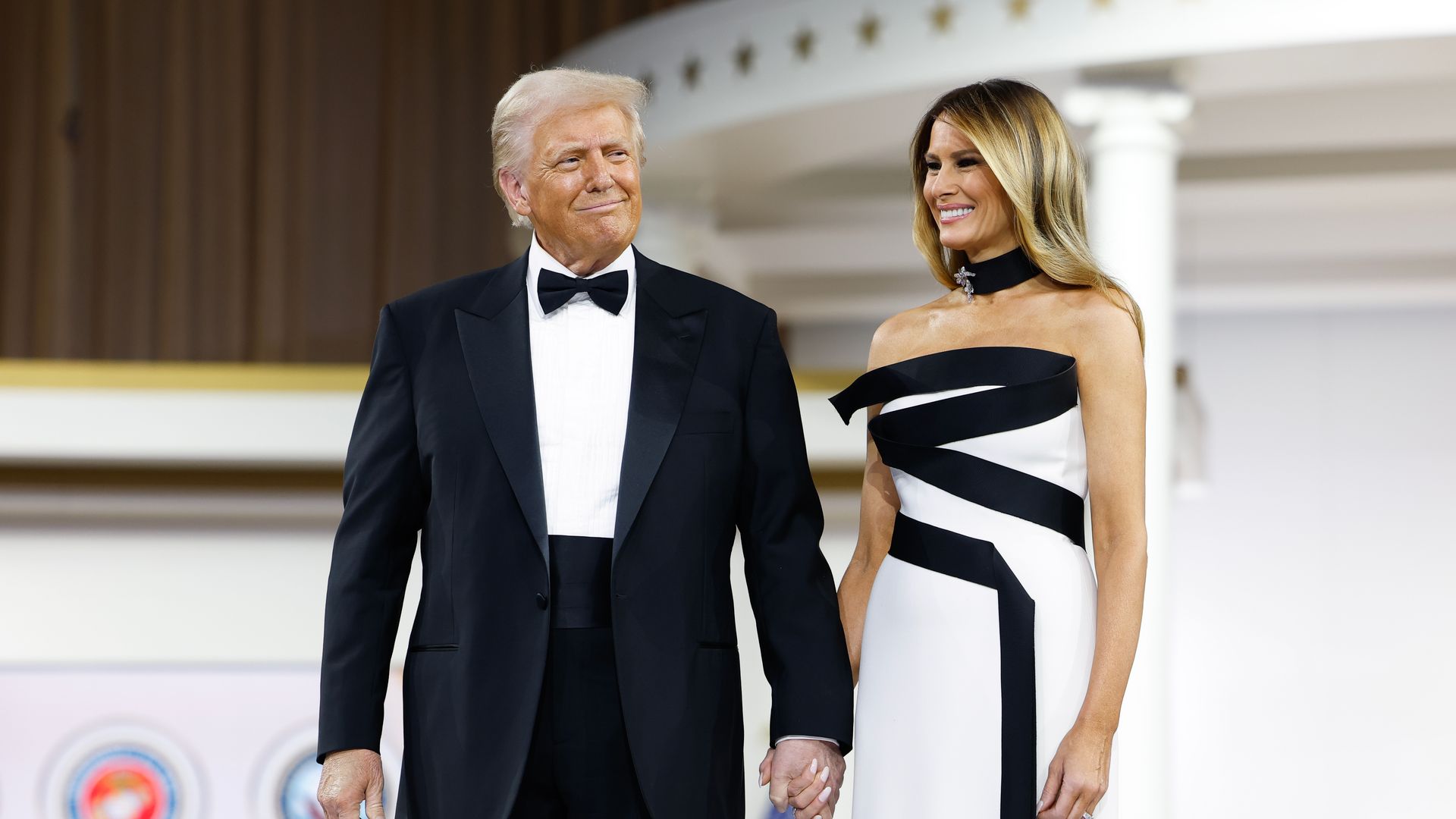
Instead of leaving through the main path, Trump turned and exchanged a few quiet words with Melania Trump. Together, they walked toward the edge of the stage—an area few people were paying attention to. There, an elderly man, estimated to be in his early seventies, was quietly arranging towels and tidying the space in preparation for the next segment of the program. Dressed in a simple uniform, his face reflected years of hard work and quiet dedication.
According to those present, the janitor had worked at the venue for decades. He was rarely noticed and had never been the focus of any public moment. But on that day, everything changed.
As they approached him, Donald Trump initiated a brief conversation. The elderly man appeared startled and unsure at first, clearly not expecting to be addressed by such high-profile figures. Before he could fully process what was happening, something even more unexpected occurred.
Both Trump and Melania Trump slowly lowered themselves to one knee.
It was not a symbolic gesture performed for show, but a deliberate, respectful act. They gently took the man’s hands, bringing the entire venue into a sudden, stunned silence.
Captured by a nearby microphone, Trump spoke a single, clear sentence:
“Thank you for doing the work that many don’t see, but all of us depend on.”
There were no grand political messages, no dramatic language—just a direct expression of gratitude, addressed to one individual.
Melania Trump then placed a clean towel into the man’s hands, a simple yet meaningful gesture of recognition. She offered a soft smile and a quiet nod, her expression conveying sincerity and respect.
Witnesses said the janitor was overwhelmed with emotion. For a few moments, he was unable to speak. His hands trembled slightly as he held the towel, his eyes welling with tears. When he finally responded, his voice was steady but humble: “I’m just doing my job.”
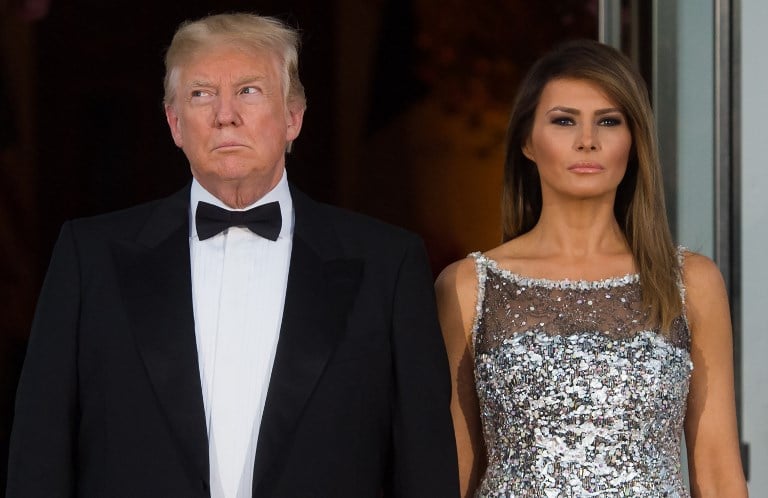
Within minutes, videos of the moment began circulating widely across social media platforms, quickly gaining millions of views and reactions. Many viewers expressed deep emotion, noting how such a small act carried profound meaning.
Media analysts later observed that in an era dominated by carefully crafted messaging, authentic gestures like this often resonate more deeply than any prepared speech.
Yet what made the moment truly powerful was not only who performed the act, but who it was directed toward—a quiet worker, representing millions of individuals whose contributions often go unnoticed.
Event organizers later confirmed that the man had been working at the venue for over 20 years. He had never sought attention and had always preferred to remain behind the scenes. That quiet dedication made the moment even more impactful.

As for Donald Trump and Melania Trump, no official statement was released afterward. There was no press campaign, no follow-up announcement. The moment stood on its own, spreading naturally through those who witnessed it.
While opinions about public figures may vary, this moment seemed to rise above political divides. It served as a reminder of the importance of respect, of acknowledging the unseen efforts that keep society functioning—efforts that are too often overlooked.
And perhaps for the elderly janitor, what mattered most was not the sudden attention, but the feeling that his work—though quiet and humble—had truly been seen and appreciated.
A brief moment. A simple sentence. Yet powerful enough to change how one man saw himself forever.


0 commentaires:
Enregistrer un commentaire