Top Ad 728x90

samedi 18 avril 2026

The Choice to Stay: How a Pediatric Surgeon’s Patient Became His Son

by


A pediatric surgeon learns to live with pressure. Lives hang in the balance, decisions must be precise, and outcomes are never guaranteed. But some moments don’t end when the surgery does.

For one doctor, it began with a six-year-old boy named Owen.


A Life Saved, Then Left Alone

Owen’s condition was severe. His body carried the strain of a heart defect that had worn him down far too early. The operation was difficult, but it succeeded.

That should have been the turning point.

Instead, the next morning brought something else.

His room was quiet. Too quiet. No parents waiting, no relief, no presence—just absence. They had signed the papers and disappeared, leaving behind a false address and a child who had just survived something he should never have faced alone.

It is easy to judge such a decision.

But behind it, there was likely fear, debt, and a sense of being overwhelmed beyond reason. None of that makes it right. It only explains how people can fail in moments that demand courage.

Owen was left with a small toy and a future no one had claimed.


A Choice That Changed Everything

The surgeon and his wife, Nora, had their own quiet struggle. Years of hoping for a child, with no answer.

They didn’t rush into the decision.

They chose it.

Adopting Owen was not an act of rescue alone. It was a commitment to stand where others had stepped away. And that kind of commitment is tested over time.

Owen didn’t trust easily. He carried the kind of fear that doesn’t need words—the fear that anyone who stays might still leave.

But they stayed.

Not perfectly, but consistently.

And over time, that consistency became something stronger than reassurance. It became belief.


Growing Into What Was Given

Owen changed.

Not suddenly, not all at once—but steadily. He grew into someone curious, determined, and quietly resilient. The kind of person who doesn’t forget where he came from, but doesn’t let it define where he’s going.

Eventually, he chose a path that mirrored the one that saved him.

Medicine. Children. Care.

Not out of obligation, but out of understanding.


When the Past Returns

Years later, in a hospital hallway, everything came full circle.

Nora had been in an accident. The urgency, the fear, the waiting—it all returned, but from a different side this time.

And then, someone from the past appeared.

A woman who had followed the ambulance. Not out of curiosity, but something deeper. Recognition. Memory.

She saw the scar.

And she knew.

It was Owen’s biological mother.


Facing What Cannot Be Undone

She spoke with regret. With the weight of years that don’t erase a single decision. She had thought about him, carried the memory, lived with it.

But some choices don’t wait for understanding. They leave a mark that time alone cannot soften.

Owen listened.

He didn’t turn away. He didn’t respond with anger either.

He stood beside Nora.

And he answered simply:

“I survived because someone chose me.”


What Defines a Family

There was no need to argue.

No need to reopen what had already been lived through.

He understood the difference between giving life and staying to protect it.

Both matter.

But they are not the same.


Final Thought

Owen’s life was shaped by two moments.

One where he was left.

And one where he was chosen.

The first could have defined everything.

But the second gave it meaning.

Family is not only where you begin.

It is who remains when staying becomes difficult—and who continues to remain, long after.

With a heavy heart, we announce the passing of this ‘Star Wars’ actor at 84

by


The entertainment world has quietly said goodbye to a familiar and respected presence, as Richard Donat has passed away at the age of 84 after a prolonged illness.

He died on March 28 at South Shore Regional Hospital, closing the chapter on a career that spanned decades and touched multiple generations of audiences—on stage, on screen, and even in animation.

Born on June 1, 1941, in Kentville, Nova Scotia, Donat discovered his love for acting early. What followed was not a career built on fleeting fame, but one shaped by consistency, craft, and quiet excellence. He became a deeply respected figure in Canadian theatre, where his work as both an actor and director earned him major honors, including the Dora Mavor Moore Award and the Merritt Award.

While theatre remained his foundation, Donat’s reach extended far beyond it. Television audiences came to recognize him through roles that carried a certain authority and emotional depth. Many will remember him from the series Haven, where he portrayed Vince Teagues—a character that brought him renewed recognition later in his career.

“I have always lived here, and then this show comes along, and suddenly your life is changed,” he once reflected, capturing the unexpected way success can arrive even after years of steady work.

For another generation, his voice became part of a beloved universe. Donat lent his talents to the animated series Star Wars: Ewoks, where he voiced Deej Warrick, helping bring to life the adventures set on the forest moon of Endor. It was a role that connected him to the enduring legacy of the Star Wars franchise, introducing his work to younger audiences and devoted fans alike.

Acting was, in many ways, part of his family’s identity. He was the brother of Peter Donat and the nephew of Robert Donat, whose own legacy in classic cinema set a high standard. Yet Richard Donat carved out his own path—one defined not by comparison, but by dedication.

Beyond the stage lights and camera lenses, his family remembered him in simpler, more personal terms. In a heartfelt tribute, they described him as a “passionate gardener, a loving and supportive partner, a devoted father, and an extremely proud grandfather.”

It’s often said that the most lasting careers are not always the loudest ones. Donat’s was built on presence—steady, reliable, and deeply human. Whether in leading roles or supporting ones, he brought a quiet authenticity that audiences felt, even if they didn’t always know his name.

His passing marks not just the loss of an actor, but the departure of a craftsman whose work helped shape the texture of Canadian theatre and television.

And while the spotlight has dimmed, the characters he brought to life—and the stories he helped tell—remain.


Why Some Veins Are More Visible—and What It Might Mean

by


Why Your Veins Look More Visible Than Usual

It can catch you off guard—one day your hands or arms look normal, and the next, the veins seem more pronounced. It’s easy to jump to conclusions and assume something is wrong. But in most cases, this change isn’t a warning sign. It’s simply your body responding to normal, everyday factors.

To understand why this happens, it helps to look at what veins actually do. They carry blood back to the heart after oxygen has been delivered to your body. Some veins sit closer to the surface of the skin than others, and how visible they appear depends on what’s covering them—mainly fat, skin thickness, and muscle tone. So when veins stand out more than usual, it’s often not because they’ve changed, but because the layers around them have.

One of the most common reasons for increased visibility is lower body fat. Fat acts like a cushion between your skin and your blood vessels. When that layer becomes thinner—whether through weight loss, regular exercise, or natural body composition—veins become easier to see. That’s why athletes and physically active people often have more visible veins. It’s not a problem; it’s simply how their bodies are structured.

Age plays a role as well. Over time, skin becomes thinner and loses some elasticity. This makes everything underneath it, including veins, more noticeable. It’s a gradual change, and for most people, it’s just part of the body’s natural aging process. Genetics also matter. Some people are simply more prone to visible veins because of lighter or thinner skin, regardless of fitness level or health.

There are also temporary factors that can make veins appear more prominent. Heat is one of them. When you’re warm—after a hot shower, during summer weather, or after physical activity—your blood vessels expand slightly. This brings veins closer to the surface, making them easier to see. Exercise does something similar by increasing blood flow. Even a long walk or carrying something heavy can make veins stand out for a while before they return to normal.

In most situations, visible veins are not a sign of poor circulation. In fact, they often indicate that blood is moving efficiently through your body. Circulation problems usually come with other symptoms—persistent coldness, numbness, unusual skin color, or wounds that heal slowly. Without those signs, visible veins alone are rarely a cause for concern.

That said, it’s still important to pay attention to changes that feel different. If a vein becomes painful, swollen, warm to the touch, or unusually hard, it’s worth getting it checked. Sudden swelling in one leg or significant discomfort shouldn’t be ignored either. These situations are less common, but they deserve proper attention.

Supporting healthy circulation doesn’t require anything extreme. Regular movement—walking, swimming, or light exercise—helps keep blood flowing well. Staying hydrated and avoiding long periods of sitting or standing in one position can also make a difference. These are simple habits, but they go a long way.

In the end, visible veins are usually just a reflection of how your body is built and how it’s functioning in the moment. Not every change needs to be treated as a problem. Sometimes, it’s just your body showing you how it works—quietly, without asking for concern.

vendredi 17 avril 2026

Our Twins Had Completely Different Skin Tones—The Truth Behind It Left Me Speechless

by


When my wife gave birth to twin boys with completely different skin tones, everything I thought I understood about my life began to fall apart.

As whispers spread and questions grew louder, I found myself uncovering a truth that forced me to reconsider everything—family, trust, and what love truly means.

If someone had told me that the birth of my children would make strangers question my marriage—and that the real explanation would reveal a hidden past my wife never meant to share—I would have laughed it off without a second thought.

But the moment Anna begged me not to look at our newborn sons, I knew something unimaginable was waiting on the other side of that moment. Something that would challenge not only my understanding of science, but also the very limits of trust within a family.

Anna and I had waited years for a child. We went through countless medical appointments, endured painful tests, and whispered quiet prayers in the dark. Three miscarriages nearly shattered us, leaving behind wounds that never truly healed.

I tried to stay strong for her, but there were nights when I would find Anna alone in the kitchen, sitting on the floor with her hands resting gently on her stomach, softly speaking to a child we had not yet met.

So when she became pregnant again—and the doctor finally told us it was safe to hope—we allowed ourselves to believe in happiness once more.

Every small milestone felt like a miracle. The first kick. Her laughter as she balanced a bowl on her belly. Me reading stories aloud to our unborn child, as if they could already hear every word.

For illustrative purposes only

By the time her due date arrived, everyone around us was ready to celebrate. We had poured our entire hearts into this moment.

The delivery itself was overwhelming—voices calling out instructions, machines beeping, Anna crying out in pain. Before I could even process what was happening, she was taken away, leaving me alone in the hallway, pacing back and forth, praying for everything to be okay.

When I was finally allowed into the room, Anna lay trembling beneath the harsh hospital lights, clutching two tiny bundles tightly in her arms.

“Don’t look at them,” she cried, her voice breaking as tears streamed down her face.

Her reaction terrified me. I begged her to explain, but she could barely form words.

Eventually, with trembling hands, she loosened her grip.

And I saw them.

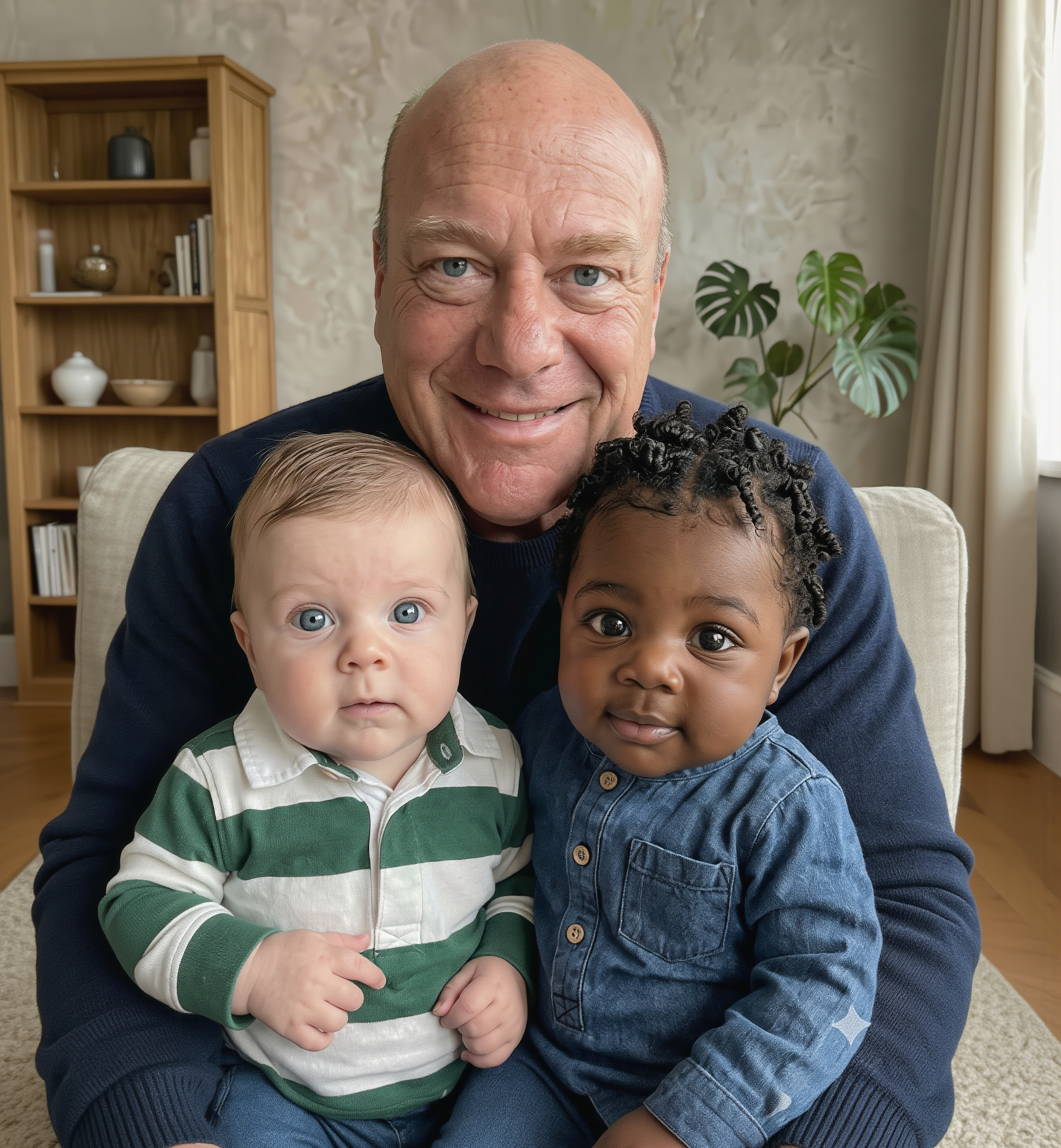
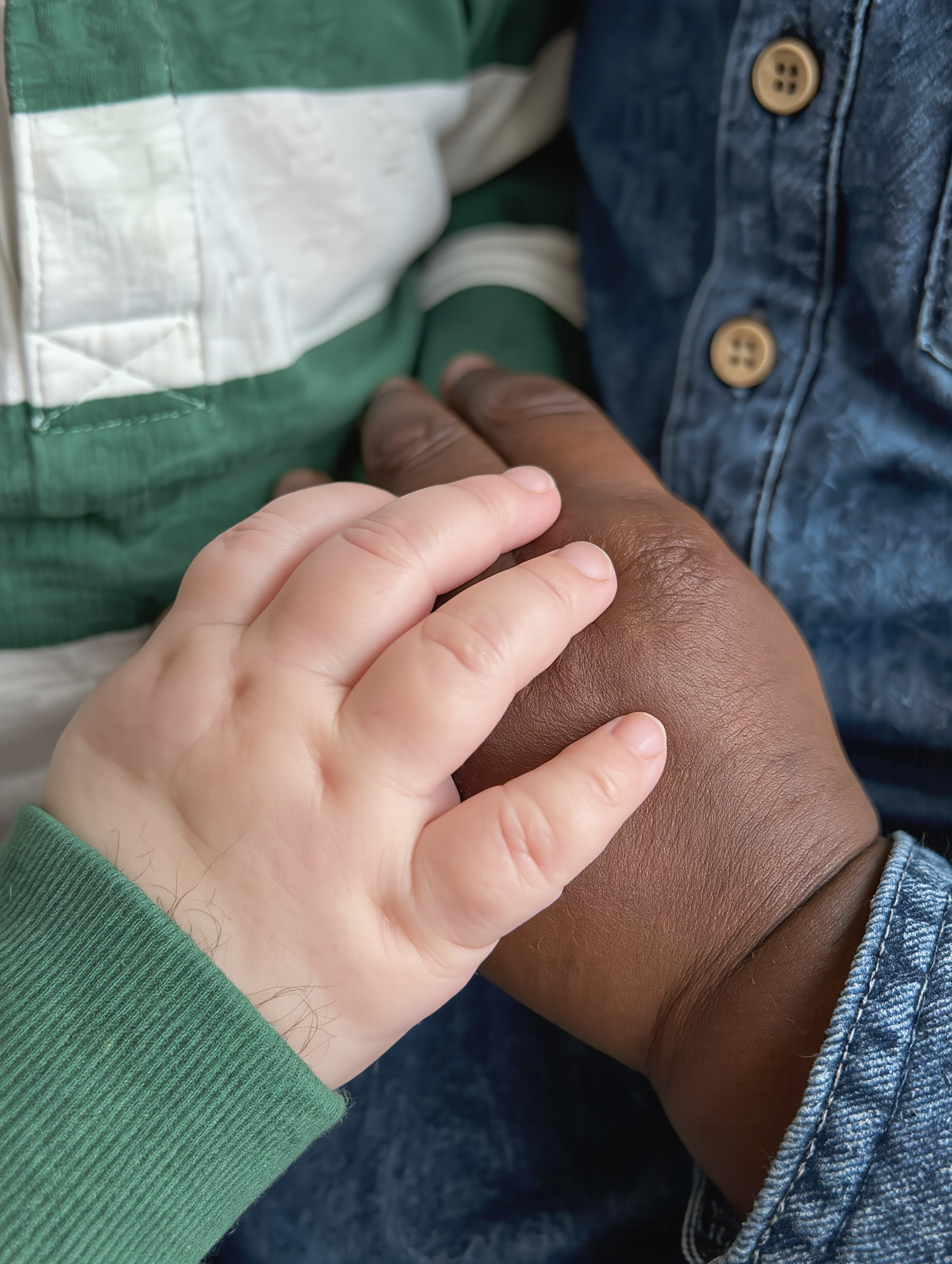
One of our sons had pale skin and pink cheeks—he looked just like me.

The other had darker skin, soft curls, and Anna’s eyes.

I froze.

Anna broke down completely, insisting through tears that she had never been unfaithful. She swore that both children were mine, even though she couldn’t explain how it was possible.

Despite the shock coursing through me, I chose to believe her. I held her close and promised that we would find answers together.

The doctors soon ran tests, but the waiting felt unbearable.

For illustrative purposes only

When the results finally came back, the doctor confirmed that I was, in fact, the biological father of both boys.

It was rare—but it was real.

Relief filled the room. But even that didn’t stop the questions.

When we returned home, people stared. They whispered. They asked things they had no right to ask.

Anna suffered the most. Every glance, every careless comment cut deeper than the last.

At the grocery store, strangers made awkward remarks. At daycare, other parents questioned her.

At night, I would find her sitting quietly in the boys’ room, watching them sleep, lost in thoughts she couldn’t escape.

Years passed. The boys grew, filling our home with laughter, energy, and chaos.

But Anna changed. She became quieter. More distant.

Then one night, after the boys’ third birthday, she finally broke.

“I can’t keep this secret anymore,” she said.

She handed me a printed conversation from her family.

The messages revealed everything—her family had pressured her into staying silent, even if it meant letting people believe she had betrayed me.

Not because she had cheated.

But because they were hiding something else.

For illustrative purposes only

That was when Anna finally told me the truth.

Her grandmother had been mixed-race—something her family had buried for years out of shame.

They feared that if anyone discovered it, it would expose a past they had worked desperately to erase.

So instead, they allowed Anna to carry the burden alone.

To be judged. To be misunderstood.

Later, doctors explained another rare possibility—that Anna could carry two different sets of DNA due to a condition from early development.

It meant that one of our sons had simply inherited genetic traits that had remained hidden for generations.

There had never been another man.

Only a truth her family refused to face.

When I finally understood this, my confusion turned into anger.

They had chosen their reputation over her dignity.

I confronted her mother and made it clear—until they apologized and accepted the truth, they would have no place in our lives.

Weeks later, at a church gathering, someone asked me the question I had heard far too many times:

“Which one is yours?”

I didn’t hesitate.

“Both of them,” I said firmly. “They are my sons. We are a family.”

Silence spread across the room.

For the first time, Anna squeezed my hand—not with fear, but with quiet confidence.

From that moment on, we stopped hiding.

We chose honesty over silence.

We chose dignity over shame.

Because sometimes, the truth doesn’t destroy a family—

it finally sets it free.

Note: This story is a work of fiction inspired by real events. Names, characters, and details have been altered. Any resemblance is coincidental. The author and publisher disclaim accuracy, liability, and responsibility for interpretations or reliance. All images are for illustration purposes only.

Colorado toddler set to die on Friday – devastated family give heartbreaking update

by


A young family in Colorado is facing an unimaginable loss, preparing to say goodbye to their baby boy after a sudden illness turned their lives upside down in a matter of days.

Their son, Alastor, just over a year old, had always been full of life—happy, energetic, the kind of child who quietly becomes the center of a home without anyone realizing how much space he fills until everything changes.

For his parents, Eric Ryan and Maegan Coffin, that change began on what should have been an ordinary morning.

On January 9, Alastor woke up congested and struggling to breathe. It looked like something many parents recognize at first—a respiratory illness, uncomfortable but manageable. Concerned, they took him to an emergency department in Northglenn, near Denver, hoping for reassurance and treatment.

Instead, they were sent home with medication.

When his condition didn’t improve, they rushed him back.

That was the moment everything shifted.

After an X-ray, Alastor stopped breathing.

Doctors worked quickly to intubate him before transferring him to another hospital, but by then, his mother believes there may have been a critical period where he was without oxygen. That possibility now hangs heavily over everything that followed.

In the days that came after, hope slowly gave way to a devastating reality.

Alastor was later declared to have no brain function.

For any parent, hearing those words is unimaginable. But for Eric and Maegan, the pain deepened even further when their other children chose to be present during the brain activity test—a moment meant to provide answers, but one that instead shattered something in all of them.

“My other children wanted to be there for his test… and watching them each break down destroyed a part of me,” Eric shared. “None of them deserved this.”

In the midst of grief, the family has been trying to hold onto memories of who Alastor was in the short time he was here.

A joyful baby. A bright presence. The heart of their home.

At the same time, they have been searching for understanding—trying to piece together how a child could go from a manageable illness to such a devastating outcome so quickly.

Doctors later identified that Alastor had been infected with Human metapneumovirus (HMPV), a lesser-known but increasingly reported respiratory virus. Combined with croup, it can cause significant airway swelling, making breathing extremely difficult—especially for infants.

Medical experts, including pediatric infectious disease specialists, note that HMPV can resemble illnesses like RSV, sometimes progressing into more serious complications such as pneumonia or bronchiolitis.

Still, for the family, the medical explanations have not eased the deeper questions.

They are now considering legal action, questioning whether more could have been done earlier—and whether critical decisions were made too quickly once their son’s condition worsened.

There have also been moments during this ordeal that added to their pain.

Eric described being briefly denied access to his son in intensive care, despite having been by his side every day.

“It’s like he almost didn’t believe me… I haven’t threatened anyone here. I haven’t even raised my voice,” he said.

Although he was eventually allowed back in, the experience left a lasting mark during an already unbearable time.

Now, as Friday approaches, the family is preparing for their final moments with Alastor. His organs are still functioning, his body still present—but the part of him that made him who he was is gone.

“I just want all of this to be over already,” Eric wrote.

Those words carry a quiet exhaustion—the kind that comes not from giving up, but from enduring more pain than a person ever thought possible.

Around them, support has grown. Friends, family, and strangers have come together, offering comfort and helping ease the financial burden through a fundraiser. It doesn’t change what’s happening, but it reminds them they are not completely alone.

Alastor’s story is a painful reminder of how quickly life can change, especially for the youngest and most vulnerable. A simple illness can turn serious without warning, and for families, the line between routine care and emergency can blur in an instant.

More than anything, it highlights something harder to put into words—the strength it takes to sit beside a child, knowing you are about to say goodbye, and still choosing to be there.

In the end, that presence becomes everything.

The Seed Almost No One Values

by


A Natural Secret That Sparks CuriosityHave you ever wondered if something that usually ends up in the trash could actually play a role in a mindful wellness routine?Across many traditional cultures, simple seeds and plant parts have long been used as part of everyday rituals to support balance, circulation, metabolism, and overall well-being — not as miracles, but as gentle companions to a healthy lifestyle.One of these often-overlooked elements is the avocado seed. While most people discard it without a second thought, it has been valued in traditional practices in different parts of the world for generations. A Traditional Drink Made with Simple IngredientsThis infusion brings together ingredients commonly used in ancestral wellness routines, appreciated for their natural aromas and comforting qualities.What You’ll Need1 grated avocado seed1 handful of dried hibiscus flowers (also known as Jamaica flower)A small handful of whole cloves3 cups of water How to Prepare the InfusionFinely grate the avocado seedPlace it in a pot with the hibiscus flowers and clovesAdd 3 cups of waterBring to a boil and let it simmer for about 15 minutesStrain and serve warmIn just a few simple steps, you’ll have a fragrant, plant-based drink that fits easily into a calm, intentional routine. How It’s Traditionally Consumed1 cup in the morning, on an empty stomach1 cup in the evening, before bedtimeFor up to 13 consecutive daysAs with any natural habit, it’s important to listen to your body and adjust according to how you feel. Traditionally Associated BenefitsIn traditional wellness contexts, this type of drink is often associated

jeudi 16 avril 2026

They Laughed When My Son Walked Across His Graduation Stage Holding A Newborn — One Woman Whispered “Just Like His Mother”… But What He Said Next Left The Entire Room Silent

by


I was thirty-five the night of my son’s graduation.

The auditorium was bright, loud, overflowing with flowers, camera flashes, and proud families who believed the hardest part of parenting was finally behind them.

I sat alone in the third row.

My dress was simple. My shoes hurt. And at my feet, tucked beside my purse, was a diaper bag that didn’t belong to the version of this moment everyone else expected.

For eighteen years, my life had been survival.

I had Adrian when I was seventeen. His father, Caleb, didn’t drift away slowly—he disappeared overnight. One morning his closet was empty, his phone was off, and every promise he had ever made was gone with him.

So it was always just us.

Adrian grew up in the quiet spaces between my exhaustion—between double shifts, overdue bills, and whispered prayers over cheap groceries. He wasn’t loud. He didn’t demand much. But he noticed everything.

He noticed when I skipped meals.

He noticed when I cried in the shower.

He noticed what it meant to stay.

By his senior year, I thought we had made it through the worst.

He had good grades, scholarships lined up, and a future that finally looked steady.

Then… something changed.

He started coming home late.

Working extra shifts.

Keeping his phone face down.

Some nights, he looked terrified. Other nights, strangely calm—like someone carrying something too heavy to put down.

Three nights before graduation, he stood in the kitchen doorway, twisting his sleeve.

“Mom,” he said quietly, “I need you to hear everything before you decide how disappointed you are.”

My heart dropped.

Then he told me.

About Hannah.

About the pregnancy.

About the baby girl who had been born less than two weeks earlier.

About the hospital visits he had hidden.

And about the promise he made to himself—

That no matter how scared he was, he would never disappear the way his father did.

Then he asked me something I wasn’t ready for.

“If I have to bring her to graduation… will you still stay?”

I didn’t sleep that night.

And I still wasn’t prepared.

The ceremony started like any other.

Names. Applause. Speeches.

Then Adrian stepped out of line.

He walked straight toward me.

“Mom,” he whispered, holding out his arms, “give her to me.”

My hands moved before my mind could catch up.

I placed the tiny baby girl into his arms.

He tucked her gently against his chest, hidden beneath his gown except for her small face wrapped in a soft pink blanket.

Then he turned—and walked toward the stage.

Promoted Content

Ако откриете папиломи на вашето тело, веднаш направете го ова
More…
470
118
157

Болките во зглобовите и грбот ќе исчезнат преку ноќ!
More…
292
73
97
Surprisingly Overpriced: Melania Trump’s Most Expensive Dress
More…
233
58
78
The whispers started immediately.

Then the laughter.

Soft at first… then spreading.

“Are you serious?”

“Wow…”

And then, behind me, a woman hissed just loud enough—

“Just like his mother.”

It hit like a slap.

For a moment, I couldn’t breathe.

I wanted to disappear.

To go back in time.

To somehow erase every mistake that had led us here.

But Adrian didn’t stop.

He didn’t look down.

He didn’t hesitate.

He walked up those steps, one steady step at a time, holding his daughter like she belonged exactly where she was.

He accepted his diploma.

Then… he didn’t leave.

He walked to the microphone.

The room shifted.

The laughter faded into confusion.

Then silence.

Adrian adjusted the mic with one hand, the other still supporting his daughter.

And he said:

“My mom taught me what staying looks like.”

The entire auditorium froze.

“My whole life,” he continued, voice steady but raw, “people looked at us and saw what was missing. A father who left. A mom who had me too young. A future that didn’t look promising.”

He paused, glancing down at the baby.

“But that’s not what I saw.”

He looked back up.

“I saw a woman who worked until her hands hurt and still showed up for me. I saw someone who chose me every single day—even when it was hard. Especially when it was hard.”

My vision blurred.

“I found out a few months ago I was going to be a father,” he said. “And yeah—I was terrified. I still am. But I knew one thing for sure…”

His voice shook, just for a second.

“I’m not leaving her.”

The room was completely silent now.

“Some of you laughed,” he said, not angrily—just honest. “Maybe you think this baby means I failed before I even started.”

He gently adjusted the blanket around her.

“But she’s not my failure.”

“She’s my responsibility.”

“And she’s never going to wonder if her dad stayed.”

Someone in the audience started crying.

Adrian looked straight toward me.

“My mom was seventeen when she had me. People saw a mistake.”

He swallowed.

“I saw a miracle.”

My chest broke open.

“If I can be even half the parent she was… my daughter is going to be just fine.”

For a moment—nothing.

Then one person stood.

Then another.

And another.

Until the entire auditorium was on its feet.

Applauding.

Crying.

The same people who had laughed couldn’t even look up.

After the ceremony, everything blurred.

Teachers hugged him.

Parents avoided my eyes.

One woman—maybe the same one who whispered—walked past us quickly, head down.

But none of that mattered.

Because my son walked off that stage with his daughter in his arms—

And his head held high.

That night, we went straight to the hospital.

Hannah was pale, exhausted, scared.

“I ruined everything,” she whispered when she saw us.

Adrian crossed the room without hesitation.

“You didn’t ruin anything,” he said.

And when she looked at me—waiting for judgment—

I just asked softly,

“Have you eaten?”

That’s when she broke down.

She came home with us a few days later.

Not because we had a perfect plan.

But because no one in that house was going to face life alone.

We made space.

We adjusted.

We struggled.

But we stayed.

A year later, our home is louder. Messier. Harder.

And fuller than I ever imagined.

Sometimes I still think about that night.

About the laughter.

About that woman who said, “just like his mother.”

She was right.

He is just like me.

He chose love when it would’ve been easier to run.

He was scared—and stayed anyway.

And in that moment, standing in that auditorium, I realized something I had carried for eighteen years finally let go:

The story didn’t belong to the people who judged us.

It belonged to us.

And my son made sure—

the last word wasn’t laughter.

It was truth.

Dr. Pimple Popper star rushed to hospital after suffering stroke while filming

by


What began as a normal day on set quickly turned into a life-altering moment for Sandra Lee—a moment she admits she almost didn’t take seriously at first.

Best known for her work on Dr. Pimple Popper and its spin-off Dr. Pimple Popper: Breaking Out, Lee has built a career helping others with visible, often uncomfortable medical conditions. But while filming her latest series, she found herself facing a frightening health crisis of her own.

It started subtly.

At first, she thought it was something minor—just a hot flash. She suddenly felt overheated, drenched in sweat, and unusually unwell while working. It didn’t seem alarming enough to stop everything, so she pushed through, like many people do.

But the feeling didn’t pass.

After returning to her parents’ home, things took a turn. The discomfort deepened into something harder to ignore. She described a growing restlessness and a strange, sharp pain shooting through one of her legs—something that didn’t fit the explanation she had given herself earlier.

Then came the signs that couldn’t be brushed off.

Walking became difficult. Her body didn’t respond the way it should. One side felt weaker, less reliable. When she tried to hold her hand out, it wouldn’t stay steady—it simply dropped, as if the strength had drained out of it.

Even her speech began to change.

Words became harder to form. Her voice didn’t sound like her own. That was the moment the realization finally surfaced.

Something was very wrong.

“I thought… am I having a stroke?” she later recalled.

Despite being a physician herself, the shock of the situation made it difficult to fully accept what was happening. There’s often a gap between knowledge and personal experience, and in that moment, even she struggled to connect the symptoms to the reality unfolding.

Still, she made the decision that mattered most—she went to the hospital.

Doctors confirmed her fears. She had suffered an Ischemic Stroke, a condition caused by a blockage that prevents blood from reaching parts of the brain. Without oxygen, brain cells begin to die, making immediate treatment critical.

The diagnosis was overwhelming.

She described the experience as surreal, almost unreal—like something that couldn’t possibly be happening to her. Yet the symptoms were undeniable: slurred speech, weakness on one side, loss of control.

“It was just a shock,” she said, acknowledging the moment when clinical understanding collided with personal vulnerability.

Filming came to a halt.

For nearly two months, Lee stepped away from work to focus entirely on recovery. Physical therapy became part of her daily routine as she worked to regain strength and coordination—basic functions that suddenly required effort and patience.

Beyond the physical challenges, the emotional impact lingered. The experience left her shaken, particularly because it happened so unexpectedly, in the middle of a busy professional moment.

Gradually, she improved.

She has since returned to work and says she feels mostly like herself again, but the experience has changed her perspective. Health is no longer something assumed—it’s something actively managed.

She now places greater emphasis on controlling key risk factors such as stress, blood pressure, and cholesterol—factors that are closely linked to stroke risk.

At 55, Lee is also using her platform in a different way.

Beyond treating patients on screen, she’s speaking openly about what happened to her, encouraging others to recognize the warning signs and act quickly. She has also pointed out that in some communities, strokes are not widely discussed, which can delay recognition and treatment.

Her message is grounded in urgency.

Doctors often refer to the FAST rule when identifying stroke symptoms:

  • Face: drooping on one side
  • Arms: weakness or inability to lift both arms
  • Speech: slurred or difficult speech
  • Time: immediate medical attention is critical

Recognizing these signs early can make a significant difference in outcomes, reducing long-term damage and improving recovery chances.

Looking back, what stands out most about her experience is how easily it could have been dismissed.

A hot flash. Fatigue. Stress.

But those small signals were the beginning of something far more serious.

Now, having lived through it, Lee is turning that moment into a warning—and a reminder—that listening to your body, even when the symptoms seem minor, can be life-saving.

It was a frightening ordeal, but one that she continues to recover from with resilience—and a renewed focus on what truly matters.

JD Vance issues grim 2-word warning to Pope Leo amid latest Trump remarks

by


The warning was chilling, a sharp, cold blade of rhetoric delivered in the quiet halls of power. A sitting vice president looked toward the Vatican and told the Pope to “be careful” when speaking on matters of theology. Within days, the White House and the Holy See were locked in a moral street fight, with the specter of global war, the weight of ancient faith, and the raw, unyielding nature of political power hanging in the balance. Allies chose sides 

and old wounds reopened, forcing the world to watch as the highest office in the land squared off against the highest authority in the Church. At the center of this firestorm is a fundamental question: who holds the right to define morality when the world is burning?

The tension began when Pope Leo XIV issued a blistering condemnation of the bombing of civilian infrastructure. He spoke not in the language of diplomacy, but in the language of the soul, denouncing the “idolatry of self and money” that he argued had blinded modern leaders to the sanctity of life. To the Vatican, this was a plea for humanity. To the White House, it was an existential threat to the narrative of strength that defines the administration’s core identity.

Donald Trump’s immediate reaction was to frame the Pope’s dissent as a political maneuver, a move that sent shockwaves through international capitals. Even Giorgia Meloni, usually a staunch ally, found the rhetoric “unacceptable,” signaling that the administration’s brash dismissal of the Pope had crossed a line that even the most hardened political pragmatists were unwilling to ignore.

Then came the intervention of JD Vance. As a Catholic convert, Vance’s decision to publicly admonish the Pope to “stay in his lane” regarding theology was a calculated inversion of traditional power dynamics. By framing political necessity as the ultimate arbiter of truth, Vance attempted to recast the current global conflict as a righteous crusade. He invoked the ghosts of World War II, hoping to wrap the administration’s policies in the mantle of historical necessity. Yet, in doing so, he bypassed the Pope’s central, haunting plea: to remember the children, the elderly, and the sick who are caught in the crossfire of geopolitical ambition.

This is no longer a mere disagreement over policy or a stray insult traded in the heat of a news cycle. It is a profound, moral rupture. It is a battle over whose suffering is deemed worthy of notice and whose voice is allowed to dictate the conscience of the nation. As the rhetoric escalates, the world is left to wonder if there is any room left for mercy in the halls of power, or if we have entered an era where the only morality that matters is the one that serves the state. In this clash between the cross and the crown, the most vulnerable are left waiting for an answer that may never come.


Some people love him. Others hate him. But no one can ignore him…

by


Some People Love Him. Others Hate Him. But No One Can Ignore Him…

The Power of Polarizing Figures in a Divided World**

Introduction: The Man Everyone Talks About

In every generation, there emerges a figure who seems to dominate conversations, headlines, and social media feeds. These individuals are not merely famous — they are inescapable. Their names spark debates at dinner tables, arguments online, and endless analysis in the media. Some people admire them deeply, seeing vision, courage, or authenticity. Others reject them entirely, viewing them as controversial, disruptive, or even dangerous.

But regardless of opinion, one thing remains true: no one can ignore them.

These polarizing figures are not new. From politics to business, entertainment to technology, history is filled with individuals who have split public opinion sharply. What is new, however, is the intensity and speed with which these divisions form in the digital age.

This article explores why certain individuals provoke such strong reactions, how media amplifies their presence, what psychological forces shape public perception, and what this phenomenon reveals about society itself.


The Nature of Polarization

To understand why some individuals are both loved and hated, we must first understand polarization.

Polarization occurs when opinions split into sharply opposing camps. Instead of a spectrum of views, people cluster at extremes. A person is either celebrated or criticized, supported or condemned — with very little middle ground.

Polarizing figures tend to embody traits that intensify this division:

  • Strong, unapologetic opinions
  • Unconventional behavior
  • Willingness to challenge norms
  • High visibility and media presence

These traits make them impossible to ignore. But they also make them difficult to agree on.

For supporters, such individuals represent courage and authenticity. For critics, they represent recklessness or arrogance. The same behavior can be interpreted in completely opposite ways depending on the observer’s perspective.


Why We Love Them

1. They Say What Others Won’t

Many people are drawn to bold figures because they articulate ideas that others may be afraid to express. In a world where social expectations often limit open conversation, a person who speaks freely can feel refreshing — even liberating.

Supporters often describe such figures as “honest,” “real,” or “fearless.” They see someone who refuses to conform, who challenges authority, and who speaks truth as they perceive it.

This creates a strong emotional bond. People don’t just agree with the figure — they identify with them.


2. They Represent Change

Polarizing individuals are often associated with disruption. They challenge established systems, question traditions, and push for transformation.

For those who feel frustrated with the status quo, this can be incredibly appealing. These figures become symbols of hope — proof that change is possible.

Even when their methods are controversial, their willingness to act can inspire admiration.


3. They Are Charismatic and Confident

Confidence is magnetic. People are naturally drawn to individuals who project certainty and self-belief, even if they don’t fully agree with them.

Charismatic figures often use:

  • Strong body language
  • Direct communication
  • Emotional storytelling

These traits make them compelling to watch and listen to. Over time, charisma can transform even controversial figures into influential leaders or cultural icons.


Why We Hate Them

1. They Challenge Deep Beliefs

While supporters see boldness, critics often see threat.

Polarizing figures frequently question established beliefs — political, cultural, or moral. For those who hold these beliefs strongly, such challenges can feel personal.

Disagreement becomes emotional, not just intellectual. It’s no longer about ideas — it’s about identity.


2. They Can Seem Arrogant or Divisive

Confidence can easily be perceived as arrogance. What one person sees as strength, another sees as ego.

Similarly, challenging norms can be viewed as disruptive or harmful. Critics may argue that such figures create division rather than unity, conflict rather than progress.

This perception fuels strong opposition.


3. Media Amplifies Controversy

Controversy attracts attention — and attention drives media coverage.

Polarizing figures often receive disproportionate coverage because:

  • Their statements generate reactions
  • Their actions create headlines
  • Their presence increases engagement

However, this coverage often focuses on the most extreme or controversial aspects of their behavior, reinforcing negative perceptions among critics.


The Role of Social Media

Social media has fundamentally changed how we interact with public figures.

In the past, people relied on traditional media for information. Today, individuals can speak directly to millions of followers. This direct communication has several effects:

1. Constant Visibility

Polarizing figures are always present — posting updates, sharing opinions, responding to critics. This constant visibility keeps them in public consciousness.

2. Echo Chambers

Social media algorithms tend to show users content that aligns with their existing beliefs. This creates echo chambers where:

  • Supporters see mostly positive content
  • Critics see mostly negative content

As a result, opinions become more extreme.


3. Rapid Spread of Controversy

A single statement can go viral within minutes. Reactions spread quickly, often without context or nuance.

This accelerates polarization, as people form opinions based on incomplete or emotionally charged information.


The Psychology Behind Strong Reactions

Why do some people evoke such intense emotions?

1. Identity and Belonging

Humans are social creatures. We define ourselves partly by the groups we belong to — political, cultural, or ideological.

When a public figure aligns with our group, we support them. When they oppose it, we reject them.

This creates an “us vs. them” dynamic.


2. Confirmation Bias

People tend to seek out information that confirms their existing beliefs.

Supporters focus on positive aspects. Critics focus on negative ones. Both sides reinforce their own views, often ignoring contradictory evidence.


3. Emotional Investment

Polarizing figures often evoke strong emotions — admiration, anger, hope, fear.

These emotions make opinions more intense and more resistant to change.


The Impact on Society

Polarizing figures don’t just influence opinions — they shape society.

1. Driving Conversations

They bring attention to issues that might otherwise be ignored. Even critics engage with them, ensuring that their ideas remain part of public discourse.


2. Shaping Culture

From language to values, these figures can influence cultural trends. Their behavior sets examples — for better or worse.


3. Creating Division

While they can inspire, they can also divide. Strong opinions on both sides can lead to conflict, reducing the possibility of constructive dialogue.


Are Polarizing Figures Good or Bad?

The answer is not simple.

The Positive Side

  • They challenge complacency
  • They inspire change
  • They encourage debate

Without such figures, societies might stagnate.


The Negative Side

  • They can deepen divisions
  • They may spread misinformation
  • They can overshadow nuanced discussion

Too much polarization can weaken social cohesion.


The Role of the Audience

It’s easy to focus on the individual — the figure who dominates headlines. But the audience plays an equally important role.

Public reaction determines:

  • Who becomes influential
  • What ideas gain traction
  • How narratives evolve

By choosing what to engage with, share, and believe, people collectively shape the impact of polarizing figures.


Finding Balance in a Divided World

In a world full of strong opinions, balance is essential.

1. Critical Thinking

Instead of reacting emotionally, take time to evaluate information:

  • What is the source?
  • Is the context complete?
  • Are there multiple perspectives?

2. Open Dialogue

Engaging with different viewpoints can reduce polarization. Listening does not mean agreeing — it means understanding.


3. Awareness of Bias

Recognizing personal biases helps create more balanced perspectives.


Conclusion: The Figures We Can’t Ignore

Some people will always divide opinion. They will be admired by some, criticized by others, and debated by all.

But their significance lies not just in who they are — but in what they reveal about us.

They show:

  • What we value
  • What we fear
  • What we are willing to fight for

In the end, the statement remains true:

Some people love him. Others hate him. But no one can ignore him.

And perhaps the most important question is not whether we love or hate such figures — but how we choose to respond to them.

Do we react with anger or understanding?
Do we follow blindly or think critically?
Do we divide further or seek common ground?

The answers to these questions will shape not just our view of these individuals — but the future of our society itself.


YOUR HIDDEN PERSONALITY REVEALED AS SCIENTIFIC COLOR TEST PROVES HOW DIFFICULT YOU REALLY ARE TO WORK WITH

by


The human mind is a labyrinth of shadows and light, a complex processing unit that filters reality through a lens crafted by years of experience, trauma, joy, and biological hardwiring. Often, we move through our days believing that we see the world exactly as it is, as if our eyes were simple cameras recording a series of objective facts. However, psychological research suggests a much more startling truth: we do not see the world as it is; we see the world as we are. This concept is the driving force behind a viral psychological phenomenon that uses simple visual stimuli to peel back the layers of the human ego. At first glance, the task appears deceptively easy, perhaps even trivial. You are presented with an image—a collection of shapes, colors, and movements—and asked to identify the element that does not belong. But as thousands of participants have discovered, this is not a test of your eyesight. It is a deep dive into the hidden machinery of your subconscious, a mirror held up to your cognitive biases and the secret traits that define how difficult or adaptable you truly are in the face of ambiguity.

Imagine an image filled with the frantic, purposeful motion of bees buzzing against a backdrop of soft, ethereal textures. For some, the bees are the only thing that exists—a symbol of industry, movement, and tangible goals. For others, the bees are merely a distraction from the sweeping elegance of the background, where colors bleed into one another in a display of abstract beauty. A third group might ignore both the subject and the setting, focusing instead on the negative space, the tension between the foreground and the background, and the subtle contrasts that suggest a deeper, more structural reality. The choice you make in that split second of observation is a neurological fingerprint. It bypasses your filtered, polite exterior and speaks directly to your primary psychological orientation. This is the “Odd One Out” test, and its results are shattering the way people understand their own personalities.

When you engage with a visual puzzle that lacks a single, objectively correct answer, you are forcing your brain to reveal its priorities. This is what psychologists refer to as a projective test. Because the “odd one” is subjective, your brain must project its own values onto the image to make sense of the chaos. If you are someone who gravitates toward the first choice—the instinctive thinker—you are essentially revealing a mind built for speed and survival. You are the person who makes the call when the building is on fire or when a deadline is seconds away. You don’t have the luxury of overthinking, and you likely find those who do to be “difficult” or obstructive. You trust your gut implicitly, a trait that makes you a natural leader but can also lead to a blind spot regarding the finer nuances of a situation. Your decisiveness is your greatest weapon and your most significant shield, protecting you from the paralysis of analysis that plagues so many others.

In stark contrast lies the second type of observer: the detail-oriented detective. If your eyes immediately locked onto a minute discrepancy that others overlooked, you possess a mind that is both a blessing and a burden. You notice the slight tremor in a colleague’s voice, the typo on page forty of a report, or the subtle shift in the wind before a storm. While this makes you incredibly precise and thoughtful, it also means you are often the person who slows down the group. You are the one who demands the data be checked one more time. To the instinctive thinkers, you are “difficult” because you refuse to move until every “i” is dotted and every “t” is crossed. Yet, without you, the team would fly off the rails. Your sharp observation is the anchor that prevents careless disasters, even if it comes at the cost of momentum.

Then there are those who possess the balanced mind, a rare cognitive state that seeks harmony over victory. If you chose the third path, you are the diplomat of the psyche. You don’t rush to judge the bees or the background; you process how they interact. You are the person friends turn to when a conflict seems unsolvable because you have the uncanny ability to see both sides of a coin simultaneously. You are rarely described as “difficult” because your primary goal is reconciliation and understanding. You are the calm in the center of the storm, the rational voice that reminds everyone that the truth usually lies somewhere in the middle. However, this desire for balance can sometimes lead to indecisiveness, as you may find it painful to choose one path when both have visible merits.

For the creative thinkers who chose the fourth option, the world is not a collection of objects but a series of possibilities. Your mind naturally wanders into the “what if” and the “could be.” You don’t just see an image; you see a story, an emotion, or a metaphor. You are drawn to ideas that others find impractical or invisible. In a professional setting, you are the visionary who suggests the radical pivot, the one who sees the potential in a failed project. You are only “difficult” to those who are tethered strictly to logic and tradition. Your imagination is a bridge to the future, but it requires others to have the faith to follow you into the unknown.

Finally, we encounter the deep analyzers, the fifth group whose minds are perpetual motion machines of inquiry. You don’t just find the odd one out; you ask why it was placed there in the first place. You question the intentions of the test, the nature of the image, and your own reaction to it. While this level of insight and self-awareness is profound, it often leads to a cycle of overthinking that can be exhausting for both you and those around you. You are “difficult” in the most intellectual sense—you challenge assumptions and refuse to accept surface-level explanations. Your insight is a scalpel, cutting through the noise to find the fundamental truth beneath the surface.

The American Psychological Association notes that our perception is not a passive act; it is a creative one. Every time we look at something, our brain uses our attention, past experiences, and ingrained cognitive patterns to construct a version of reality. Research from the National Institute of Mental Health further supports this, showing that our brains prioritize different stimuli based on our internal state. This is why the “Odd One Out” test is so jarring. It reveals that the person sitting next to you, looking at the exact same screen, is literally living in a different world than you are.

The concept of being “difficult” is, therefore, a matter of perspective. A decisive person thinks a detail-oriented person is difficult; a creative person thinks a rational person is difficult. By picking your “odd one,” you haven’t just completed a puzzle—you have diagnosed your own cognitive bias. You have revealed whether you lead with instinct, logic, emotion, or curiosity. In the end, the most difficult people are often those who refuse to acknowledge that their way of seeing the world is just one of many. Understanding your choice is the first step toward true self-awareness, allowing you to see past the image and into the very heart of how you function. Which number did you choose? The answer might be the most honest thing you’ve learned about yourself all year.