Top Ad 728x90

dimanche 28 juin 2026

SAD NEWS: Just 30 Minutes Ago, Jimmy Kimmel with tears in their eyes made the sad announcement...See more in comment

by


When the studio lights dimmed and the familiar  music faded, the audience expected the usual sharp-witted banter and lighthearted jabs that had become the hallmark of late-night television. Instead, millions of viewers tuned in to witness a moment that shattered the traditional boundaries of entertainment, leaving an entire nation stunned. Jimmy Kimmel walked onto the stage not with his customary confident stride, but with a heavy, visible burden that instantly silenced the room. In a world increasingly saturated with digital noise and carefully curated public personas, the beloved television host stripped away his professional armor to confront a stark and uncomfortable reality. He was not there to deliver punchlines or offer a comforting escape from the daily grind. Instead, he was there to process a personal betrayal of the future he had envisioned for his children and his country. What unfolded in front of the camera was less a rehearsed monologue and more a raw, unfiltered public reckoning that left an indelible mark on the cultural landscape.

The emotional weight of the moment was palpable from the very first syllable. With a voice that wavered and eyes shimmering with unshed tears, Kimmel addressed the election results and the victory of Donald Trump. He spoke with the cadence of a man who understood the profound implications of the  political shift, cutting through the abstract debates that often dominate the news cycle. Every policy and political maneuver, he argued, was not merely a theoretical disagreement to be hashed out by pundits on cable news; it was a force that would land directly on the lives of everyday Americans. He listed those he feared would be hurt the most by the new administration, including immigrants, patients relying on the healthcare system, seniors, working families, and allies abroad. It was an exhaustive list born of genuine empathy and deep-seated anxiety, highlighting the vulnerability of those already living on the margins. He spoke not as a television personality with an elite platform, but as a father and a citizen who felt the foundational values of his nation slipping away.

The atmosphere inside the studio was thick with tension as Kimmel laid his grief bare. As his voice faltered, the audience instinctively tried to lift him with a wave of applause, a desperate and well-intentioned attempt to return to the comfort of the status quo. They wanted to laugh, they wanted to be reassured, and they wanted to believe that everything was going to be fine. Yet, the heaviness in the room never truly lifted. The applause died down, giving way to an uncomfortable silence that spoke volumes about the state of the country. This vulnerability did not just reveal his political leanings; it unveiled a deeper, more profound fear that the United States might be fundamentally shifting away from the core values Kimmel believed were universally shared. It was a stark reminder that even those who are paid to bring joy into our living rooms are subject to the same crushing anxiety that keeps millions of Americans awake at night.

As expected, the reaction to the monologue was as swift, sharp, and divided as the fractures of the nation itself. Within minutes of the broadcast ending, social media erupted into a fierce debate over the role of entertainment in a highly polarized society. Critics immediately accused the host of hijacking a platform designed for comedy and turning it into a partisan lecture. They argued that late-night television should remain a sanctuary, a safe haven from the toxicity of the political cycle and the endless barrage of bad news. For these viewers, the stage should be used to entertain, not to dictate moral or political views. Conversely, his supporters saw the moment as an act of profound courage and necessary human honesty in a media landscape often built on distraction and superficiality. To them, he was a man who refused to hide behind a facade of easy jokes when his heart was clearly breaking, providing a voice for millions who felt the exact same way.

That polarization is precisely why this monologue has continued to endure in the public consciousness long after the cameras stopped rolling. It captured a profound divide in American life, expressed in real time through a man whose primary job is to help people forget their worries—only to stand before them and admit, with trembling lips, that he could no longer forget his own. It dismantled the illusion of detachment that is so often expected of public figures. The monologue highlighted the exhaustion that many feel as they watch the political landscape evolve, struggling to find a sense of stability in an unpredictable world. It was a mirror held up to society, forcing viewers to confront the reality that the divisions in the country are not just political, but deeply personal, affecting how people view the future of their families and the fabric of their communities.

In that quiet moment between his words, Jimmy Kimmel did not just share his own profound sadness; he invited an entire nation to sit with its own. He proved that sometimes, the most powerful and revolutionary thing a public figure can do is stop pretending that everything is okay. The aftermath of the broadcast continues to resonate across various platforms, reminding us that we are navigating an era defined by deep uncertainty and emotional turbulence. The debate over whether  politics belongs in comedy may rage on, but the undeniable truth is that the emotional core of that night touched a nerve that cannot be easily dismissed. It remains a testament to the power of authenticity in an artificial world, showing that when the heavy realities of life come knocking, sometimes the most honest response is to simply let the mask fall and speak the truth, no matter how uncomfortable it might be.

I found these little things but I don’t really know what they are for… Do you know what they are for? Answer in the comments 👇

by


While sorting through a dusty wooden box that had been sitting untouched in a garage for years, I expected to find little more than old tools and family keepsakes.

Among faded photographs, worn hardware, and miscellaneous items from another era, I discovered a collection of small, identical objects unlike anything I had seen before.

They were carefully shaped, lightweight, and clearly manufactured for a specific purpose.

Yet despite their precise design, I had no idea what they were or why someone had saved so many of them.

Curiosity quickly transformed a simple cleanup project into an unexpected search for answers.

I shared photographs with friends, relatives, and hobbyists, hoping someone would recognize the mysterious pieces.

Suggestions ranged from machine components to game pieces and decorative accessories, but none of the explanations seemed convincing.

The more people examined the objects, the more intriguing the mystery became.

Their uniform appearance suggested they had once played an important role, yet their purpose appeared completely lost to modern memory.

Eventually, I showed the images to an experienced collector who specialized in historical tools and household artifacts.

Unlike everyone before him, he recognized them immediately.

He explained that the objects had once been commonly used in everyday life, serving a practical function during a period when different technologies and systems were part of daily routines.

As newer innovations replaced older methods, the need for these small components gradually disappeared.

What had once been familiar to millions of people eventually became unrecognizable to later generations.

The experience offered a fascinating reminder of how quickly the world changes.

Items that seem ordinary today may become puzzling artifacts tomorrow as technology, habits, and industries continue to evolve.

Looking at those forgotten pieces, I realized that many of the devices and tools we rely on now could one day inspire the same curiosity in future generations.

Sometimes the most interesting discoveries are not rare treasures or valuable collectibles, but simple objects that reveal how everyday life has transformed over time.

They remind us that even the most familiar things can become part of history sooner than we expect.


🔴30 minutes ago: Russian Su-57 pilot destroys US aircraft carrier carrying 700 tanks... See more

by


Early, unconfirmed reports indicate a sudden attack on a heavily protected vessel, leaving minimal time for defensive systems to respond. According to sources close to the situation, the strike caused massive destruction and may have resulted in catastrophic losses. Questions are already being raised about how such a fortified target could have been successfully hit, prompting intense scrutiny from defense analysts and international observers alike

House Passes Bill To Deport Migrants Who Assault Police Officers

by


 The GOP-controlled House passed a measure that would require the federal government to deport any illegal immigrant who assaults a police officer over the objections of a majority of Democrats.

The legislation passed with a vote of 265 to 148, with 54 Democrats siding with the GOP. The Detain and Deport Illegal Aliens Who Assault Cops Act is the name of the legislation, which Rep. Jeff Van Drew, R-N.J., is leading.

“There is no reason that an illegal alien who attacks our law enforcement should remain in our country; that shows zero respect for our rule of law or our institutions, and they will not be positive contributors to society,” Van Drew said.

The bill mandates that federal authorities hold illegal immigrants in custody until deportation. It also establishes a new category of migrant inadmissibility, specifically targeting illegal immigrants accused of assaulting police, according to Van Drew.

After the bill passed, Rep. Tom Emmer, the House Majority Whip and No. 3 Republican, said, “House Democrats just voted to protect violent, illegal immigrants over our brave law enforcement officers. Once again, the Democrat Party proves they are the most anti-law enforcement party in history.”

A stunning new poll from CNN shows the Democratic Party lagging far behind the Republicans when it comes to economic issues, which stunned CNN data guru Harry Enten.

After months of the Democrats and their media allies trying to scare Americans about Trump’s tariff proposals, the data analyst was taken aback by the failure of their propaganda.

“You would think after all of the waves, Kate Bolduan, after the last few months, the first five months of the Donald Trump presidency, right, the first four months of the Donald Trump presidency, that you’d expect that Democrats would have this massive lead on the economy. It ain’t so. It ain’t so,” he said to CNN anchor Kate Bolduan.

“The party that is closest to your economic views. In November of 2023, it was the Republicans by 11 points. Now it’s still within that range, still within that margin of error, plus eight point advantage for the Republican Party,” the data analyst said.

“How is that possible, Democrats? How is that possible after all the recession fears, after the stock markets been doing all of this, after all the tariffs that Americans are against, and Republicans still hold an eight point lead on the economy. Are you kidding me?” he said.

“How is that — when we look for trends, how is that trending with other data that you’re pulling in?” the anchor inquired.

“Yes, if it was just this one CNN poll, that would be one thing. But take a look at Reuters/IPSOS. What do we see here? Party with a better economic plan. Well in May of 2024, just before Donald Trump was re-elected president, Republicans had a nine point advantage,” Enten said.

“Look at where we are now in May of 2025. The advantage actually went up by three points. Now Republicans have a 12-point advantage when it comes to the party with a better economic plan. And again, this is after months of economic — supposed economic uncertainty in which the stock market’s been going bonkers, in which the tariff wars that Americans are against have been going on. And yet, despite all of that, the Democrats are down by 12 points on the economy. This speaks to Democratic problems on the economy better than basically anything that you could possibly look at,” the stunned data analyst said.

“The Republicans still hold an advantage on the all-important key issue of the day. And that is the reason why, even if Donald Trump’s approval ratings are a little bit lower than they used to be, Republicans are not out of the ballgame because they still have a clear advantage on the economy, whether you look at CNN’s polls or whether you look at the IPSOS poll right here in which they have a 12-point advantage on the economy,” he said.

He also said Republicans have taken a stronghold on the middle-class vote.

Zohran Mamdani Walks Into Courtroom — Judge’s Decision Stuns Everyone

by


 A federal judge has temporarily blocked Mayor Zohran Mamdani’s attempt to stop the bankruptcy sale of more than 5,000 rent-subsidized apartments across New York City, posing an early challenge to the socialist mayor’s housing agenda.

U.S. Bankruptcy Judge David Jones of the Southern District of New York recently ruled that the city could not intervene in the ongoing sale of properties owned by Pinnacle Group, one of the city’s largest landlords.

The company declared bankruptcy in May after defaulting on $560 million in loans, and the Mamdani administration has claimed it owes the city $12.7 million in unpaid housing code fines.

Mamdani had directed the city’s Law Department to intervene, arguing the deal could worsen housing instability for thousands of tenants living in subsidized apartments.

But Judge Jones rejected the city’s motion, saying the bankruptcy auction must move forward.

Pinnacle, owned by billionaire Joel Wiener, controls more than 140 buildings and 9,000 units across the five boroughs.

Court filings show Summit Real Estate Holdings has offered $450 million to buy roughly 90 of the company’s properties.

“Completion of the bankruptcy auction process will bring financial stability along with the opportunity to stabilize services, outcomes which we would expect the City would not want to disrupt,” said Ken Fisher, an attorney representing Pinnacle.

City lawyers argued in filings that Summit might not have enough money to fix the buildings, warning that “continuing losses and mounting expenses might lead to additional bankruptcies or reorganizations, a state of financial and social chaos potentially worse than the current situation.”

Tenant groups opposing the sale say Pinnacle has neglected maintenance and allowed conditions to deteriorate, while others fear the new owners could raise rents or further reduce oversight.

The battle over Pinnacle’s holdings became a flashpoint during the mayoral race, where Mamdani campaigned on preserving rent-subsidized housing and protecting low-income tenants.

The court defeat also adds political strain for Mamdani as he defends his choice of Cea Weaver to head the Mayor’s Office to Protect Tenants.

Weaver has faced criticism for past posts describing homeownership as “a weapon of white supremacy.”

She later apologized, calling the comments “poorly phrased and not reflective of my work.”

Mamdani also got bad news this week on his “racial equity plan.”

Mamdani is “moving the goalposts” on poverty in the nation’s largest city with his newly unveiled racial equity plan to justify a massive expansion of government intervention, a top city policy analyst warns.

Mamdani released his “Preliminary Citywide Racial Equity Plan” in early August, which was promptly criticized by President Donald Trump’s Justice Department.

Santiago Vidal Calvo of the Manhattan Institute, who told Fox News that the report’s claim that 62% of New Yorkers can’t make it in the city on a “true cost of living” is all a ploy to call a crisis that must be solved with more government.

“What he’s essentially doing is moving the goalposts,” Vidal Calvo explained.

“He’s essentially saying that what the federal government qualifies as somebody below the poverty line — which is essentially like $34,000, $35,000 a year. Those might be like 2024 numbers, but it’s pretty close to that — we’re essentially moving the goalposts so anybody under $160,000 with children cannot afford to live in New York City,” Calvo added.

The “reality” of the situation, Vidal Calvo says, is that you “don’t make a place more affordable by making people earn more,” but instead the city needs to “ask the right questions” about policies that drive wage growth and new housing development.

“So the issue here is that we are focusing on a problem that the socialists in City Hall want to believe — that if you give people more money, they essentially can access more things,” Calvo said.

The high cost of living in New York City is driven by several factors, including housing, which is an area where Vidal Calvo says City Hall needs to “encourage more housing being built around the city.”

Believe it or not, this lady was the crush of every guy in the 1970s. SHE was America’s most stunning girl! 😲 Now, she looks completely different 😟. Do you know who she is? Just wait until you see her in her youth – you’ll recognize her right away. Check In First comment👇

by


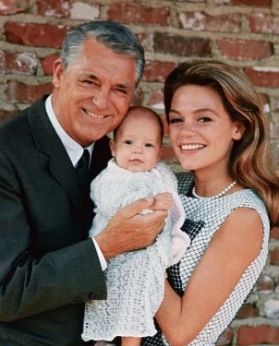
Once one of Hollywood’s brightest stars, Dyan Cannon continues to captivate hearts, this time not with glamorous roles, but with her resilience and authenticity.

Recently spotted walking her dogs in Los Angeles, the 88-year-old actress drew mixed online reactions.

Some admired her natural grace, while others reminded the world how harsh fame can be toward aging women.

But Cannon remains at peace, proving that true beauty comes from within.

From Fame to Finding Herself

Cannon’s career spanned decades of success, earning three Oscar nominations, a Golden Globe win, and a star on the Hollywood Walk of Fame.


My Son Said He’d Move Out Unless I Bought Him a New Car — What Happened Next Changed Our Family Forever

by


I replayed the argument a thousand times in that empty house, wondering if I had chosen pride over love. Yet beneath the doubt was a quiet conviction: if I bought his compliance, I would lose his respect. When he finally called, the anger was gone. Life with his father had mirrored my message exactly—no car, no shortcuts, just the same hard truth about work and responsibility.

Slowly, he changed. Extra shifts. Budget spreadsheets. Late nights comparing prices on used cars instead of scrolling aimlessly. The day he sent me that photo—standing beside a modest car he’d bought himself—his smile looked different. It wasn’t gratitude for a gift; it was the pride of someone who had finally met himself. In that moment, I understood: love isn’t proven by what we buy for our children, but by what we refuse to buy for them, so they can discover their own strength.