Top Ad 728x90

vendredi 13 février 2026

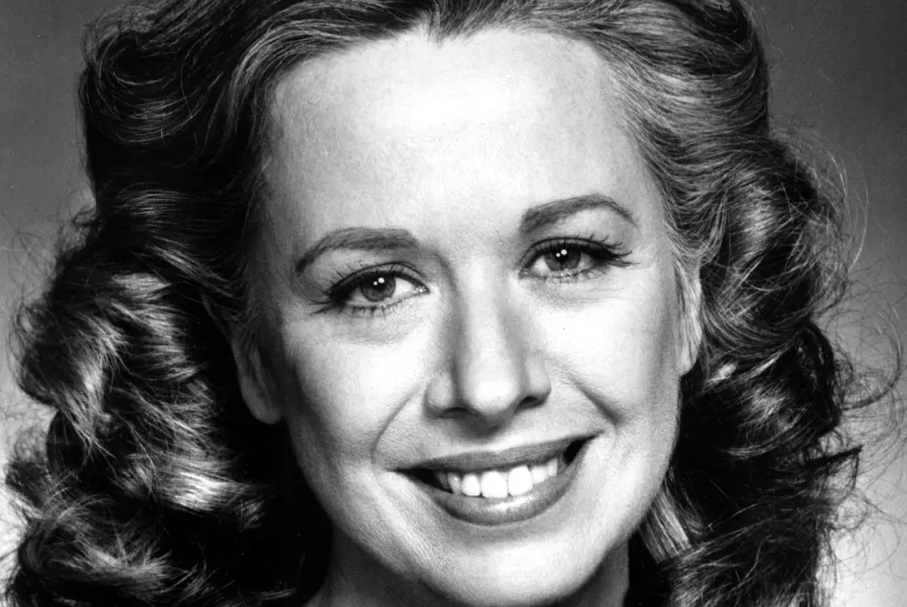
Tributes Pour In After the Passing of a Beloved Public Figure

by


 She became a television favorite thanks to a role that felt larger than life. With sharp timing, bold energy, and a memorable Southern flair, she created a character audiences instantly recognized and never forgot. That performance didn’t just earn attention—it helped shape the tone of a beloved sitcom and made her one of the standout personalities of her era.

Long before national fame, she built her foundation on the stage. She trained seriously in theater and performed in many productions where discipline and versatility mattered most. Those years of live performance sharpened her presence, strengthened her voice, and gave her the confidence to command any room—skills that later translated perfectly to the screen.

When television and film opportunities arrived, the transition felt natural. She proved she could handle comedy with ease while also bringing depth to more serious moments. Her range allowed her to take on different kinds of characters, and she earned respect not only from audiences but also from fellow professionals who admired her steady work ethic.

Off screen, she was often described as generous, grounded, and hardworking. Fans continued to follow her career because she delivered something rare—humor with authenticity. Even after stepping away from the spotlight, her influence remained, inspiring performers who valued fearless storytelling. The actress behind that unforgettable legacy was Polly Holliday, remembered as a symbol of charm, talent, and timeless television magic.

The Trick Using Aluminum Foil on Door Handles

by


What Is the Aluminum Foil Door Handle Trick?

The trick is simple: you wrap aluminum foil tightly around a door handle, usually on an exterior door. According to online claims, this can serve several purposes, including:

  • Alerting homeowners to attempted break-ins
  • Making the handle harder to grip
  • Acting as a temporary deterrent to intruders
  • Protecting handles from paint, chemicals, or dirt

Because aluminum foil is cheap and readily available, many people are tempted to try it as a quick fix for security or maintenance concerns.

Why People Believe It Works

The popularity of this trick comes from a few perceived benefits:

Noise and movement
Foil crinkles easily. The idea is that if someone tries to turn the handle, the sound may alert you — especially at night.

Uncomfortable grip
Foil can feel slippery or awkward in the hand, which some believe could slow down someone trying to open the door quickly.

Visual signal
If you leave home and return to find the foil disturbed or removed, it may signal that someone tampered with the handle.

Protection during projects
This is one area where the trick genuinely shines. Painters and DIYers often wrap door handles in foil to protect them from paint splatter, dust, or harsh chemicals.

The Reality: What Aluminum Foil Can and Can’t Do

While the trick sounds clever, it’s important to separate myth from reality.

It is not real security
Aluminum foil will not stop a determined intruder. It doesn’t reinforce the lock, prevent forced entry, or replace proper security measures.

Noise is unreliable
Foil only makes noise if someone grabs it directly — and even then, the sound may not be loud enough to wake someone or attract attention.

Easy to remove
Anyone can tear off foil in seconds. It may slightly inconvenience someone, but it won’t deter serious attempts.

Best used for protection, not prevention
Foil is genuinely useful for protecting door handles during painting, renovations, or cleaning projects. In that context, it’s practical, fast, and effective.

Safer and Smarter Alternatives

If your goal is home security, consider these options instead:

  • Install quality door and window locks
  • Use motion-sensor lights
  • Add a doorbell camera or security camera
  • Reinforce doors with strike plates and deadbolts
  • Use alarm systems or door sensors

If your goal is maintenance or DIY protection, aluminum foil is a great choice — quick to apply, easy to remove, and inexpensive.

Final Thoughts

The aluminum foil on door handles trick is one of those ideas that sits somewhere between clever and overhyped. While it won’t protect your home from intruders, it can serve as a minor alert or a temporary protective cover during home projects.

Used wisely and with realistic expectations, aluminum foil remains a handy household tool — just not a substitute for real security.

If you want, I can rewrite this in a blog/SEO style, make it shorter, or turn it into a viral social media article.

Trump Reacts After JD Vance Receives Mixed Crowd Reaction at Olympic Opening Ceremony!

by


 The 2026 Winter Olympics in Milan began with the characteristic grandeur and high-altitude energy that only a global sporting event can summon. Held at the iconic San Siro Stadium, the opening ceremony was a masterclass in Italian artistry, featuring a parade of nations that celebrated the pinnacle of human athletic endeavor. However, amidst the swirling snow effects and the rhythmic cheers for the world’s elite athletes, a moment of domestic political friction found its way onto the international stage. Vice President JD Vance, attending the ceremony alongside his wife, Usha, to lead the American delegation, became the focal point of a complex and audible crowd reaction that has since ignited a firestorm of commentary across the political spectrum.

As the television cameras panned across the VIP section to capture the Vice President supporting Team USA, the atmosphere within the stadium shifted from uniform applause to a decidedly more fractured reception. On-the-ground reports described a cacophony that was difficult to categorize: a significant swell of cheers and patriotic chanting was met with a perceptible wave of jeering and whistling from certain sections of the international audience. This “mixed” reception—a polite euphemism for the audible tension in the arena—seemed to mirror the polarized climate of the modern era, proving that even the Olympic Truce cannot entirely insulate political figures from the visceral opinions of a global public.

The reaction was particularly notable given the setting. The San Siro, usually a cauldron for footballing rivalries, had been transformed into a sanctuary for international unity. While the Team USA athletes themselves were greeted with a thunderous and uncomplicated roar of approval as they marched in their Ralph Lauren gear, the brief focus on the executive leadership provided a stark contrast. Broadcast feeds varied in how they handled the moment; some international outlets captured the full range of the crowd’s vocalizations, while certain domestic feeds appeared to lean into the more positive audio of the cheering sections. This discrepancy only fueled the fire on social media, where clips of the moment were dissected with forensic intensity by both supporters and critics of the administration.

President Donald Trump, monitoring the events while traveling aboard Air Force One, was quick to address the situation when questioned by the press corps. His response was uncharacteristically measured, reflecting an acknowledgment of the complexities involved in international diplomacy and public appearance. The President expressed a degree of surprise at the intensity of the reception but noted that major international gatherings are, by their very nature, diverse assemblies of people with vastly different ideological perspectives. He emphasized that at an event of this magnitude, one must expect a wide range of opinions, suggesting that the reaction was more a reflection of the global political temperature than a specific indictment of the Vice President’s presence.

The fallout from the ceremony highlights a recurring challenge for the Olympic movement: the struggle to remain a “neutral” space in an increasingly politicized world. In the weeks leading up to the Milan Games, Olympic officials had been vocal about their desire for a respectful atmosphere. They repeatedly urged spectators to leave political grievances at the stadium gates and focus instead on the themes of sportsmanship, endurance, and international cooperation. The mixed reaction to Vice President Vance served as a reminder that the “Olympic Bubble” is a fragile construct. While the athletes are celebrated for their physical prowess and national representation, the politicians who accompany them are often viewed through the lens of their policies and the global standing of their respective governments.

Social media became the primary theater for the ensuing debate. Supporters of the Vice President pointed to the cheers as evidence of a strong American presence and criticized the jeerers for disrespecting a guest of the Italian government and a representative of the United States. Conversely, critics argued that the reaction was a legitimate expression of global sentiment, reflecting how American domestic and foreign policies are perceived by the international community. Some commentators noted that Vance was not alone in receiving a tepid or mixed response; several other national delegations and their accompanying dignitaries faced similar pockets of vocal dissent, suggesting a broader trend of audience engagement that goes beyond the standard polite applause of decades past.

Amidst the swirling controversy, the International Olympic Committee (IOC) and the Milan-Cortina organizing committee worked quickly to pivot the conversation back to the field of play. They issued statements reiterating that the true heart of the Games lies in the performance of the competitors. They expressed hope that as the initial luster and occasional friction of the opening ceremony faded, the focus would shift to the stories of sacrifice and triumph that define the Winter Games. For many viewers, this transition was welcome. As the first sets of medals were contested in disciplines like alpine skiing and short-track speed skating, the “Vance moment” began to recede into the background, replaced by the sheer spectacle of world-class competition.

Ultimately, the opening ceremony in Milan will likely be remembered for two things: the breathtaking Italian pageantry and the reminder that the world is watching the United States with a critical eye. The presence of a high-ranking official like JD Vance at such an event is a traditional show of support for a nation’s athletes, yet it also serves as a lightning rod for the complexities of the current era. The President’s reaction—framing the event as a gathering of diverse perspectives—seemed intended to de-escalate the narrative and refocus the American public on the pursuit of gold.

As the 2026 Winter Olympics continue, the focus remains on whether the spirit of unity can truly prevail over the friction of the present day. While the mixed reaction at San Siro was a momentary discord in the symphony of the opening night, it underscored the reality that the Olympics do not exist in a vacuum. They are a reflection of the world as it is—beautiful, competitive, and deeply divided. As the athletes push the limits of what is possible on ice and snow, they do so under a shared global spotlight that illuminates both the best of our common humanity and the persistent realities of our political differences.

Sarah Palin was crushed after her 27 year role model marriage ended by email, now she has found love again!

by


 The public narrative of Sarah Palin is frequently painted in the high-contrast colors of political theater—the meteoric rise, the polarising speeches, and the eventual retreat to the periphery of the national stage. Yet, this familiar arc often masks a far more intimate and human unraveling that occurred away from the glare of the teleprompter. Beneath the headlines and the partisan firestorms lay a thirty-year marriage that served as the foundational bedrock of her identity, a partnership that was forged in the rugged isolation of Alaska long before the world knew her name. When that foundation finally crumbled, it did so not with a bang, but with the sterile click of a sent email, leaving a woman once defined by her fire to navigate the cold reality of a life suddenly made solitary.

Sarah and Todd Palin were high school sweethearts whose union was built on the tangible, grueling realities of life in the Last Frontier. Their early years were defined by the rhythmic labor of commercial fishing, the chaos of raising five children, and the shared ambition of a couple who viewed themselves as an unbreakable unit. In those decades, the partnership was egalitarian and deeply intertwined; they were a team that rewarded constancy and physical stamina. They didn’t just share a bed; they shared the machinery of survival, managing household responsibilities and local business ventures with the kind of unspoken synchronicity that comes from decades of shared effort. Their love was a practical, weathered thing, rooted in the soil of Wasilla rather than the artifice of public performance.

However, the delicate balance of that partnership began to tilt as Sarah’s political trajectory moved from local boards to the governor’s mansion, and finally, to a vice-presidential ticket. The transition brought a level of exposure that essentially transformed their private sanctuary into public property. In the hyper-kinetic world of national politics, the roles within the marriage were forced into a new, uncomfortable geometry. As Sarah moved toward the center of the world’s attention, Todd was increasingly relegated to the periphery. While she addressed roaring crowds and faced the scrutiny of the global press, he became the silent custodian of their domestic stability. He absorbed the invisible pressures of their new reality, shielding their children from the fallout of fame and maintaining the day-to-day structures that allowed her to soar. The weight of the world was on her shoulders, but the weight of the home fell increasingly on his.

The strain of this shift did not manifest in a single, explosive event. Instead, it was an accumulation of micro-fractures—distance born of differing schedules, the fatigue of constant public judgment, and the slow erosion of mutual understanding. Todd’s identity as a husband and co-pilot evolved into that of a caretaker, while Sarah’s world expanded at a pace that left little room for the quiet, slow-motion intimacy of their earlier life. They were two people moving through the same house but inhabiting different universes. The gap between them widened not through malice or hostility, but through a slow, agonizing exhaustion of the spirit.

When the end finally arrived, it was marked by a jarring lack of sentimentality. There was no final, tearful confrontation or a dramatic decision made across a kitchen table. Instead, the termination of thirty-one years of history arrived in the form of an email from Todd’s attorney—a clinical, impersonal message that Sarah received while she was alone. The coldness of the medium stood in stark contrast to the heat of the life they had shared, serving as a brutal reminder of how thoroughly the emotional groundwork had already turned to ash. The divorce was more than a legal filing; it was a total loss of the identity she had worn since her youth.

The aftermath of the divorce left Sarah Palin in a space of profound vulnerability. She was no longer half of a legendary Alaskan power couple, nor was she the “hockey mom” archetype that had captivated the American imagination. She was a woman in her fifties forced to redefine herself against a backdrop of public scrutiny and private grief. In the quiet years that followed, the fiery, combative persona that once defined her began to soften. The sharp edges of her public image gave way to something more restrained and reflective. She retreated into a smaller, more selective circle of trust, learning to inhabit a life that was no longer predicated on the approval of a crowd or the support of a lifelong partner.

It was during this period of rebuilding that a new chapter began to emerge, characterized by a relationship with former NHL star Ron Duguay. This new connection, however, appeared differently than the one that had come before. It was not a partnership built on elopement and shared domestic struggle, but one built on companionship and a shared understanding of life in the public eye. With Duguay, Palin seemed to find a way to re-enter the world on her own terms. The resilience she began to display was less about political posturing and more about the quiet, inward work of survival. She began to appear at public events selectively, moving with a sense of calm that suggested the lessons of her loss had finally taken root.

The story of Sarah Palin’s marriage and its subsequent collapse provides a complicated counterpoint to the usual narrative of her career. It reveals the invisible costs of public success and the way extraordinary external pressures can fracture even the most durable of foundations. Her journey after the divorce is not a simple tale of reinvention, but a study in endurance. It is the story of a woman learning to navigate a quieter strength—a strength forged not in the heat of a campaign rally, but in the slow, painstaking process of rebuilding a self after the shared history of a lifetime has ended. Today, she stands as a figure whose public image is still debated, but whose private journey reflects a universal human truth: that the hardest battles are often the ones fought in the quiet of an empty house, and the most significant victories are the ones where we learn to stand on our own.

20 Minutes ago in Colorado, Peyton Manning was confirmed as – See it!

by


 For a few tense minutes, it felt as if the sports world had been blindsided. Posts began circulating at a frantic pace, each more alarming than the last. Social media feeds flooded with dramatic headlines claiming that former NFL quarterback Peyton Manning had been “confirmed” in breaking news out of Colorado. The wording was vague but ominous, and the implication was clear enough to spark immediate panic. Fans paused mid-scroll, unsure whether they were witnessing a tragic moment unfold in real time.

The reaction was swift and emotional. Messages of disbelief and grief began appearing across platforms. People recalled unforgettable games, iconic comebacks, and the precision passing that defined an era of football. For many, Manning was more than a quarterback—he was a symbol of excellence, resilience, and leadership. The thought of losing such a figure, even momentarily, felt like losing a piece of personal history.

But as quickly as the rumor ignited, cracks in the story began to show.

No credible news outlet reported the claim. No statement emerged from Manning’s family, representatives, or the organizations with which he remains connected. There were no official press conferences, no verified reports from law enforcement, and no confirmation from trusted journalists. Instead, the source appeared to be a chain of loosely connected posts repeating the same alarming phrasing without evidence.

Within a short time, the truth became undeniable: the story was false. Peyton Manning was not the subject of any tragic announcement. There had been no confirmed incident in Colorado. The viral posts were nothing more than a hoax—an example of how misinformation can spread rapidly when emotion overrides verification.

The episode highlighted a familiar pattern in the digital age. A headline crafted to shock gains traction because it plays on fear and admiration. The name of a beloved public figure ensures engagement. The ambiguity of the wording leaves room for worst-case assumptions. By the time skepticism sets in, thousands—sometimes millions—have already shared the claim.

Peyton Manning’s career alone explains why such rumors carry so much weight. A two-time Super Bowl champion and one of the most decorated quarterbacks in NFL history, he built a legacy that transcends team loyalties. His years with the Indianapolis Colts and later the Denver Broncos cemented his place among the game’s all-time greats. His meticulous preparation, commanding presence at the line of scrimmage, and unmatched football IQ made him a defining athlete of his generation.

Beyond statistics and championships, Manning cultivated a reputation for professionalism and humility. Teammates frequently praised his leadership. Opponents respected his discipline and preparation. Fans admired not only his talent but also his humor and accessibility in countless interviews and public appearances.

Since retiring from professional football, he has remained active in broadcasting, philanthropy, and business ventures. His involvement in sports media and charitable initiatives has kept him visible and connected to the communities that supported him throughout his playing career. There has been no credible indication of any sudden event or crisis involving him.

The rapid rise and fall of this rumor serves as a case study in modern media dynamics. Information now moves at extraordinary speed. Algorithms reward engagement, not accuracy. A dramatic post can travel across continents before a fact-check ever appears. In moments like this, the emotional response often precedes rational evaluation.

Part of the confusion stems from the way certain posts are crafted. Sensational phrases such as “confirmed as…” or “breaking news” are intentionally left incomplete, prompting readers to click or share before seeking context. The structure encourages speculation. The lack of detail creates urgency. And in the absence of immediate clarification, imaginations fill the gaps.

What ultimately stopped the panic was not a dramatic rebuttal but the simple absence of credible confirmation. Reliable journalism operates differently. Major developments involving public figures are reported by established news organizations with verification from multiple sources. Families issue statements. Representatives provide clarity. Law enforcement confirms incidents when appropriate. None of that occurred here.

Instead, the rumor dissipated as users began questioning its origin. Fact-checkers and responsible commentators pointed out the lack of substantiation. Gradually, the online conversation shifted from alarm to reflection. Many expressed frustration at having been misled. Others acknowledged how quickly they had reacted without verifying the claim.

Peyton Manning remains alive and well. There has been no official report of any tragic event in Colorado or elsewhere. The viral story was entirely fabricated.

While the incident ended without harm to the individual at its center, it underscores a broader issue. Public figures often become targets of false narratives because their names generate attention. A fabricated story about a widely respected athlete spreads more easily than one about an unknown person. The emotional investment fans feel can be exploited for clicks and engagement.

The lesson is not merely about one rumor. It is about the responsibility that accompanies instantaneous communication. Before reacting to dramatic headlines, it is essential to pause. Before sharing a claim, it is crucial to confirm its origin. Trusted news organizations and official statements remain the standard for verifying major developments.

Peyton Manning’s legacy is built on decades of dedication and achievement. It deserves accuracy and respect, not exploitation through unfounded claims. The brief surge of panic surrounding this false report serves as a reminder of how easily misinformation can masquerade as truth in a fast-moving digital landscape.

In the end, nothing had happened—except a demonstration of how quickly fear can spread when fueled by unverified content. The football legend at the center of the storm continues to live his life, unaffected by the baseless headline that briefly unsettled fans worldwide.

And perhaps the most enduring takeaway from the episode is simple: in a world where rumors travel at lightning speed, verification must move just as quickly.

From rural Ireland to rock legend – The life of a generation-defining voice!

by


 The story of Dolores O’Riordan is one of the most poignant narratives in the history of rock and roll—a journey that began in the mist-shrouded quiet of rural Ireland and ascended to the deafening roar of global superstardom. It is a tale defined by a voice that could shift from a fragile whisper to a primal, guttural cry in a single heartbeat, but it is also a somber reflection on the invisible weights that many of our greatest icons carry long after the stage lights go dark.

Born on September 6, 1971, in the small community of Ballybricken, County Limerick, Dolores was the youngest of nine children. Her upbringing was steeped in the traditions of a devout Roman Catholic family and the rich folklore of the Irish countryside. Her childhood was a mixture of modest warmth and significant hardship; her father, Terence, suffered permanent brain damage following a motorbike accident in 1968, leaving the family’s emotional and financial stability largely on the shoulders of her mother, Eileen. Dolores often described her early years as “sheltered and trippy,” a time when she found companionship in the animals of the farm, confiding in her dog and talking to the cows as if they were her silent confessors.

Music was not merely a hobby for Dolores; it was an innate language. Legend has it she was singing before she could properly talk. By the age of five, her talent was so undeniable that her school principal would place her on a desk to perform for students twice her age. Raised on a steady diet of traditional Irish songs and church hymns, she developed a unique vocal style—a combination of the traditional “keening” lament and a raw, modern rock sensibility—that would eventually define the sound of a generation.

While her mother envisioned a life for her in the church as a nun or perhaps as a music teacher, Dolores felt the pull of a different calling. At eighteen, she left home, driven by an urgent need to find her own voice. Living in poverty and often going hungry, she took a chance on a local band called The Cranberry Saw Us, who were looking for a new lead singer. When she walked into that audition, she was a shy, small girl from Limerick, but when she sang the lyrics she had written, the band was paralyzed by her power. They simplified their name to The Cranberries, and the trajectory of music history was forever altered.

The band’s rise during the early 1990s was meteoric. Their debut album, Everybody Else Is Doing It, So Why Can’t We?, introduced the world to “Linger” and “Dreams,” songs that perfectly captured the ache and ethereal beauty of O’Riordan’s vocals. By the time they released their sophomore effort, No Need to Argue, Dolores had transitioned from a shy girl who performed with her back to the audience into a global powerhouse.

However, the weight of this sudden fame was immense. Dolores became one of the richest and most recognizable women in Ireland, but the scrutiny of the public eye left little room for the “freedom” of youth. She often felt that the world was waiting for her to slip up. Behind the scenes, she was battling profound depression and the early stages of anorexia, struggles exacerbated by the relentless pace of touring. Yet, even in her suffering, she remained fiercely principled. When her label hesitated to release the politically charged “Zombie”—a visceral response to the tragic deaths of two children during an IRA bombing—Dolores stood her ground, reportedly tearing up a million-dollar check intended to sway her toward a more “commercial” sound. She refused to sing about fluff when her heart was heavy with the troubles of her homeland.

In 1994, she sought a semblance of normalcy by marrying Don Burton, the tour manager for Duran Duran. They eventually moved to Canada, where they raised three children. Dolores spoke often and passionately about motherhood, crediting her children with being “elemental” to her healing process. It was during this period of maturity that she began to confront the traumas of her past, revealing that she had been a victim of sexual abuse by a trusted figure for four years starting when she was just eight years old. The flashbacks and the lingering psychological scars made her adult life a complex tapestry of professional triumph and personal agony.

The 2000s were a turbulent era for the singer. The Cranberries went on hiatus in 2003, allowing her to pursue solo projects, but she struggled with the haunting memories of her childhood. At her father’s funeral in 2011, she was forced to confront her abuser, who approached her to apologize—a moment she described as a nightmare made manifest. The subsequent end of her twenty-year marriage in 2014 pushed her to a breaking point. Her mental health struggles became public after an incident on a flight led to her arrest, revealing that she was suffering from bipolar disorder. She was candid about her “tortoise effect”—the instinct to hide under blankets and meditate to escape the noise of the world—and her habit of binge drinking to numb the pain of her memories.

Despite these shadows, the final chapter of her life showed signs of a creative resurgence. The Cranberries had reunited, and Dolores was making plans for the future. In January 2018, she was in London for a recording session, leaving upbeat voicemails for colleagues about new music and upcoming dinners. She sounded hopeful, singing snippets of songs into her phone. It was this contrast that made the news of her death on January 15, 2018, so shocking. Found unresponsive in her hotel bathtub, the coroner later ruled her death an accidental drowning due to alcohol intoxication. She was only forty-six years old.

The loss of Dolores O’Riordan was more than the loss of a rock star; it was the silencing of a generation-defining voice that gave permission to millions to be fragile, angry, and honest all at once. She was an artist who never wore a mask, whose “unique Irish tone” wasn’t a gimmick but a badge of identity. Today, her music remains a haunting, beautiful legacy—a reminder that while some stars burn out far too soon, the light they leave behind is eternal. Dolores didn’t just sing songs; she sang the truth of her own existence, and in doing so, she ensured that her name and her voice would never be forgotten.

SAD ENDING BELOVED Singer and Actor found!

by


 The global entertainment community stands in a profound and heavy silence today as it grapples with the shattering news of the passing of a singular talent—a man who bridged the worlds of music and cinema with an effortless, magnetic grace. Found in the quiet solitude of his home this morning, the departure of this beloved singer and actor has sent shockwaves through the hearts of millions, leaving a void that feels as vast as the legacy he leaves behind. To his fans, he was more than a performer; he was a companion through the speakers and a confidant on the screen, an artist whose career spanned decades and defined the emotional landscape of multiple generations.

The tragedy of his death is compounded by the emerging details of his final days, which paint a poignant picture of a man caught in the crosshairs of public adoration and private agony. While the world saw a figure of unshakable charisma and unparalleled success, those within his inner circle have begun to speak of the silent battles he waged behind the velvet curtains of fame. It is a narrative that has become hauntingly familiar in the age of the modern icon: the heavy burden of “the mask.” He carried personal demons with a stoicism that shielded even his most devoted admirers from the depth of his struggle. Despite the accolades, the sold-out arenas, and the critical acclaim, he navigated a labyrinth of internal hardship that eventually became an insurmountable weight. His passing serves as a grueling, visceral reminder that the joy an artist projects to the world is often a gift purchased at the cost of their own inner peace.

In the hours following the announcement, the digital world has transformed into a global cathedral of mourning. Social media platforms, once bustling with the trivialities of daily life, have been overtaken by a tidal wave of tributes, archival footage, and personal anecdotes from those whose lives were altered by his art. Fellow luminaries from the stage and screen have shared their disbelief, describing him not just as a colleague, but as a north star of creative integrity. For many, his music was the soundtrack to their first loves and their deepest heartbreaks; his films were the mirrors in which they saw their own humanity reflected. From Tokyo to New York, London to Sydney, candlelight vigils are being organized spontaneously, as people feel a desperate need to gather in the physical world to honor a man who made them feel less alone in the digital one.

This loss, however, has ignited a conversation that goes far beyond the boundaries of celebrity culture. It has forced a stark, necessary confrontation with the reality of mental health in an era of relentless performance. The tragic nature of his end has become a clarion call for empathy, urging a society often obsessed with the veneer of perfection to look closer at the cracks beneath the surface. His story is a heartbreaking testament to the fact that success is not a shield against suffering, and that the most brilliant lights often cast the darkest shadows. The urgency to “check on your friends” has moved from a platitude to a desperate plea, as the world realizes that even the most celebrated among us can feel invisible in their pain.

As we begin the long process of saying goodbye to a legend who left us far too soon, we find ourselves turning back to the very work that made us love him. In the notes of a familiar song or the flicker of a classic scene, his presence remains vibrant and defiant against the finality of death. His art was his greatest act of communication, a bridge he built to reach out to the world, and that bridge remains standing even as he has crossed over. We are reminded that while the flesh is frail and the mind is sometimes a treacherous place, the creative spirit possesses a form of immortality. He may have vanished from the physical stage, but he has taken up permanent residence in the cultural consciousness.

The coming days will undoubtedly be filled with formal eulogies, career retrospectives, and the somber logistics of a public farewell. There will be discussions about his influence on the industry and the “greatness” of his body of work. But beneath the grandiosity of the “icon” and the “legend,” there remains the memory of a human being who simply wanted to be heard and understood. As the candles flicker in town squares and the music plays softly in bedrooms around the world, the prevailing sentiment is one of profound gratitude. We are grateful for the years he gave us, for the risks he took in his craft, and for the vulnerability he shared, even when it cost him everything.

His legacy will not be defined solely by the tragic circumstances of his exit, but by the immeasurable beauty he introduced into the world while he was here. He taught us how to feel, how to listen, and how to see the nuance in the human experience. As the sun sets on the era of his physical presence, it rises on the era of his eternal influence. The voice that once filled stadiums now whispers in the quiet moments of our own lives, a haunting and beautiful reminder to lead with kindness, to listen for the silence between the notes, and to never take for granted the people who bring light into our lives. Rest in peace to a true titan of the arts—a man whose star was so bright it could never truly be extinguished, only moved to a higher sky. Your curtain has fallen, but the applause will never stop.