Top Ad 728x90

samedi 11 avril 2026

My Father Sewed Me a Dress from My Late Mother's Wedding Gown for Prom – My Teacher Laughed Until an Officer Walked In

by


I wore a prom dress my father made from my late mother's wedding gown, and for one beautiful moment, I felt like she was with me. Then my cruelest teacher laughed at me in front of everyone, until an officer walked in and changed the whole night.

Advertisement

The first time I saw my dad sewing in the living room, I honestly thought he'd lost his mind.

He was a plumber with cracked hands, bad knees, and work boots older than some of my classmates. Sewing wasn't part of his skill set.

Neither was secrecy, which made the closed hall closet and the brown paper packages even stranger.

"Go to bed, Syd," he said, hunching over a piece of ivory fabric.

I didn't know yet that he was making me the most important thing I would ever wear.

I honestly thought he'd lost his mind.

Advertisement

I leaned on the doorway. "Since when do you even know how to sew?"

He didn't look up. "Since YouTube and your mom's old sewing kit taught me."

I laughed. "That answer made me more nervous, Dad. Not less."

He finally glanced over his shoulder. "Bed. Now."

***

That was my dad, John. He could fix a burst pipe in 20 minutes, stretch chili into three dinners, and make a joke out of almost anything. He'd been doing that since I was five, when my mother died and the two of us became our own little household.

Money was always tight. He took extra jobs, and I learned early not to ask for much.

"That answer made me more nervous, Dad."

Advertisement

***

By senior spring, prom had taken over the school. Girls talked about limos, nails, shoes, and dresses that cost more than our monthly grocery bill.

One night, while I rinsed plates and he sat at the table with a stack of bills, I said, "Dad, Lila's cousin has a bunch of old dresses. I might borrow one."

He looked up. "Why, hon?"

I blinked. "For prom."

He kept watching me, and I knew he had heard the part I hadn't said out loud: "I know we can't afford one."

"Dad, it's fine," I said. "I really don't care that much."

"I know we can't afford one."

Advertisement

That was a lie, and we both knew it.

He folded one bill in half and set it down. "Leave the dress to me."

I snorted. "That's an insane sentence coming from a man who owns three identical work shirts."

He pointed toward the sink. "Finish those dishes before I start charging you rent, Syd."

That should have been the end of it, but after that, I started noticing things.

The hall closet stayed closed.

"Leave the dress to me."

Advertisement

Dad came home with brown paper packages and tucked them under his arm when he saw me.

At night, long after I went to bed, I heard the low hum of the sewing machine from the living room.

The first time I heard it, I padded out in my socks and stood in the hallway.

My father was bent over a spill of ivory fabric under the lamp. He had reading glasses low on his nose and his mouth pulled tight in concentration. One thick hand held the cloth steady while the other guided it through the machine with a care I'd only ever seen him use on old photographs.

I leaned against the wall. "Since when do you sew?"

He jumped so hard he nearly jabbed himself with the needle.

Dad came home with brown paper packages.

Advertisement

"Goodness, Syd," he said.

"Sorry, Dad. I heard sounds."

He pulled the glasses off. "Go to bed."

"What are you making?"

"Nothing you need to worry about."

I looked at the fabric again. "That doesn't look like nothing."

He pulled the glasses off.

He held up a finger. "Nope. Out."

Advertisement

"You're being weird, Dad."

"Go, baby," he said, offering me a small smile.

***

For almost a month, that became our rhythm.

I came home from school and found thread on the couch. He burned dinner twice because he was trying to sew a hem and stir stew at the same time.

One night, I found a bandage on his thumb.

"You're being weird, Dad."

Advertisement

"What happened there?"

He glanced down. "The zipper fought back."

"You've been sewing so much you injured yourself over formalwear, Dad."

He shrugged. "War asks different things of different men."

I laughed, but then I had to turn away because something in my chest had gone tight.

***

Mrs. Tilmot, my English teacher, made that whole month feel longer than it was.

She never yelled, but that would have been easier. She just knew how to say cruel things in a voice calm enough to make you sound dramatic for noticing.

"War asks different things of different men."

Advertisement

"Sydney, do try to look awake when I speak."

"That essay reads like a greeting card."

"Oh, you're upset? How exhausting for the rest of us."

***

At first, I told myself I was imagining it.

Then Lila leaned over in English one day and whispered, "Why does she always come for you?"

I kept writing. "Maybe my face annoys her."

Lila frowned. "Your face is literally just sitting there."

I told myself I was imagining it.

Advertisement

I laughed because that was easier than admitting the truth. My best trick in high school was acting like things didn't matter.

It worked on almost everybody except my dad.

***

One night, he found me at the kitchen table, rewriting an English paper for the third time.

"I thought you'd already finished that one," he said, setting down his coffee.

"She said the first draft was lazy."

I laughed because that was easier.

Advertisement

He pulled out the chair across from me. "Was it lazy?"

"No."

"Then stop doing extra work for someone who enjoys watching you bleed."

I looked up. "You make that sound simple, Dad. I don't know why she hates me."

"It isn't simple, hon," he said. "It's just still true. And I'll speak to the school, don't worry about that."

I nodded.

"I don't know why she hates me."

Advertisement

***

A week before prom, he knocked on my bedroom door with a garment bag in one hand.

My heart started pounding before he even spoke.

"Okay," he said. "Before you react, know two things. One, it's not perfect. Two, the zipper and I are no longer friends."

I sat up too fast. "Dad."

"Wait. Slow down, don't rip anything, Syd."

But I was already crying.

"Before you react, know two things."

Advertisement

He sighed. "Sydney, I haven't even shown it to you yet."

Then he unzipped the bag.

For a second, I just stared.

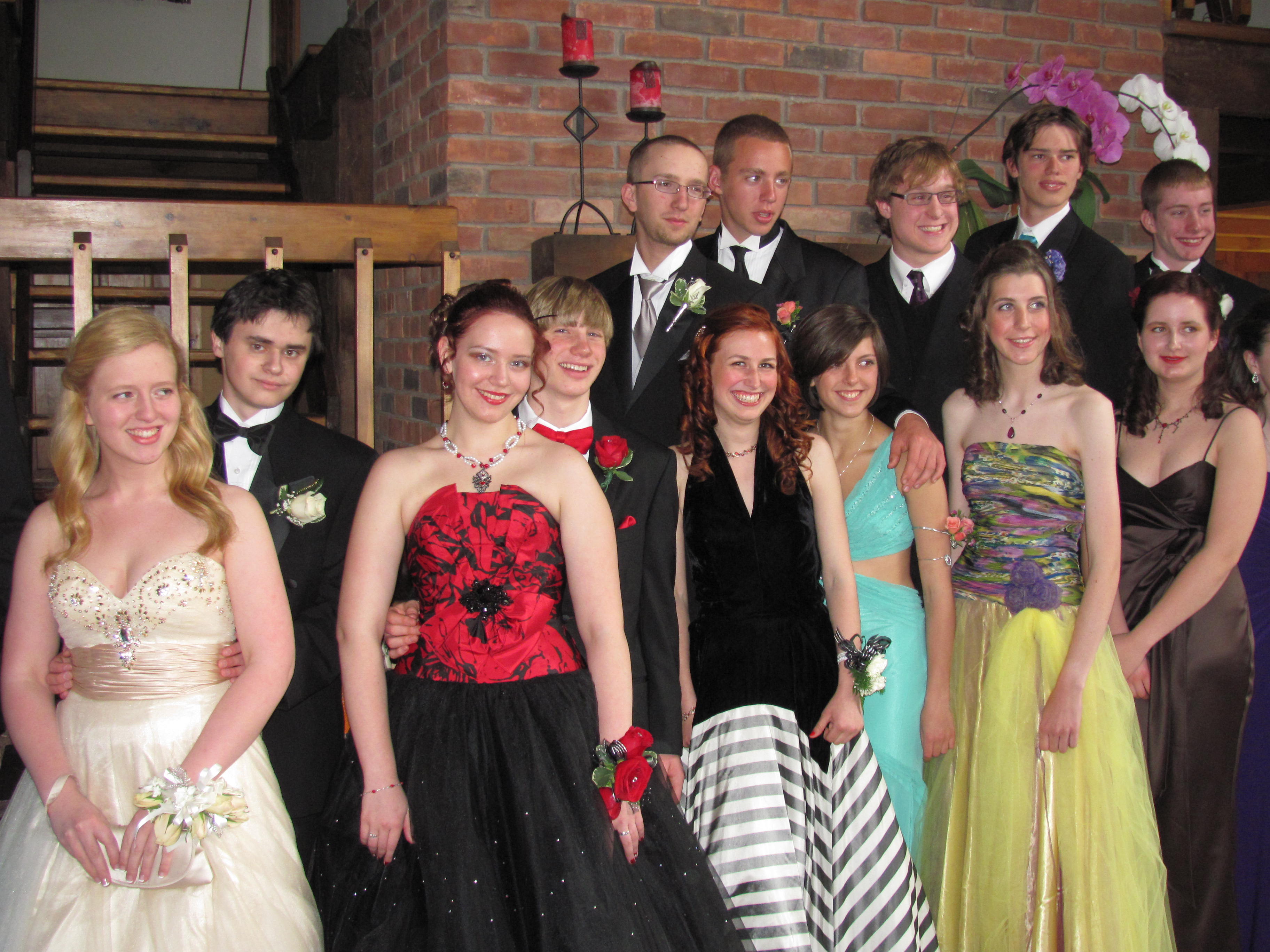
The dress was ivory, soft and luminous, with blue flowers curving across the bodice and tiny hand-stitched details near the hem.

I covered my mouth.

"Dad..."

He looked suddenly nervous. "Your mom's gown had good bones, Syd. It needed some changing, obviously. Mom was taller, and she had very strong opinions about sleeves."

I covered my mouth.

Advertisement

I stood up so fast my knees hit the bed frame.

"Dad, you made this from Mom's wedding dress?"

He nodded once.

That was when I started crying for real.

He set the dress down and crossed the room in two steps. "Hey, Syd. If you hate it, you hate it, hon. We can still..."

"I don't hate it."

My voice cracked so badly he stopped talking.

I started crying for real.

Advertisement

I touched the blue flowers with shaking fingers. "It's beautiful."

His eyes got shiny then, which meant mine got worse.

Dad cleared his throat. "Your mom would have wanted to be there. I couldn't give you that." He looked at the dress, then back at me. "But I thought maybe I could let part of her go with you."

I threw my arms around him so hard he made an oof sound.

He hugged me back and said into my hair, "Easy, girl. Your old man is fragile."

"Your mom would have wanted to be there."

Advertisement

"You're not fragile."

He pulled back and looked at me. "Try it on, kid."

***

When I stepped out wearing it, he just stared.

"What?" I asked.

He blinked fast once. "Nothing. It's just... you look like somebody who ought to have everything good in the world."

That nearly had me crying again.

"Try it on, kid."

Advertisement

***

Prom night came warm and clear.

Lila gasped when she saw me.

Her date said, "Whoa," which I decided to take as respectful.

Even I felt different walking into that hotel ballroom, not rich, not transformed, just... held together. Like I was carrying both my parents with me somehow. My mother's gown, molded by my father's hands.

For one whole moment, I let myself feel pretty.

Then Mrs. Tilmot spotted me.

Lila gasped when she saw me.

Advertisement

***

She came toward me with a champagne flute in one hand and that familiar expression on her face, the one that always looked like she'd smelled something bad and decided it was me.

She stopped right in front of me and looked me up and down slowly.

I went cold.

Then she said, loud enough for half the room to hear, "Well. I suppose if the theme was attic clearance, you've nailed it."

The people nearest us went quiet.

I went cold.

Advertisement

She tilted her head. "Did you really think you could compete for prom queen in that, Sydney? It looks like somebody turned old curtains into a home economics project."

My whole body locked up.

I heard someone inhale sharply behind me.

Lila said, "Mrs. Tilmot..."

But the teacher laughed.

She reached toward the blue flowers on my shoulder like she had some right to touch them.

My whole body locked up.

Advertisement

"What are these?" she said. "Hand-stitched pity?"

"Mrs. Tilmot?" a man's voice said from behind her.

The room shifted, and she turned.

***

Officer Warren wasn't a stranger to me.

He'd come by our house two weeks earlier to take my dad's statement after the school finally opened a formal review into Mrs. Tilmot. He was one of those steady, quiet men who made a room calm just by standing in it.

I remembered the way he'd listened while my father sat at our kitchen table, turning his coffee mug in both hands and saying, as evenly as he could, "I'm not asking for special treatment. I just want my daughter left alone."

"Hand-stitched pity?"

Advertisement

So when I heard his voice behind me at prom, I knew it before I turned.

"Mrs. Tilmot?"

She went still.

Officer Warren stood at the edge of the crowd in full uniform, with the assistant principal beside him, pale and furious.

Mrs. Tilmot tried for a smile. "Officer. Is there a problem?"

"Yes," he said. "You need to step outside with me."

"Is there a problem?"

Advertisement

Her chin lifted. "Over what? A harmless comment?"

The assistant principal cut in. "We warned you earlier to keep your distance from Sydney."

Mrs. Tilmot gave a sharp laugh. "Oh, please."

Officer Warren didn't react. "This didn't start tonight, Mrs. Tilmot. We've had statements from students, staff, and Sydney's father about the way you've treated her."

A murmur moved through the room.

Lila grabbed my hand.

"We warned you earlier to keep your distance from Sydney."

Advertisement

Mrs. Tilmot looked around like the room had betrayed her. "This is absurd."

"No," the assistant principal said. "What's absurd is that, after a direct warning, you still chose to humiliate a student in public while drinking at a school event."

Her face changed. So did the room.

"Ma'am," Officer Warren said, his voice going firm, "you need to come with me now."

She looked at me then.

I touched the blue flowers on my shoulder and heard my own voice come out steadier than I felt.

"This is absurd."

Advertisement

"You always acted like being poor should make me ashamed," I said. "It never did."

Nobody spoke.

Then Mrs. Tilmot looked away first, and Officer Warren led her out.

"Enjoy your night, Sydney," he called over his shoulder.

***

When they were gone, the room seemed to breathe again.

Lila touched my arm. "Sydney?"

I looked down at my dress. My hands were shaking.

"Enjoy your night, Sydney."

Advertisement

"Hey," she said. "Look at me. You look beautiful."

A boy from my history class stepped closer. "I heard your dad made that? Really?"

"Yeah," I said. "He did."

He let out a low whistle. "Then your dad's a genius."

And just like that, people stopped staring at me like I was something fragile. They smiled, someone asked me to dance, and Lila pulled me onto the floor before I could say no. And for the first time all night, I laughed without forcing it.

"I heard your dad made that? Really?"

Advertisement

When I got home, Dad was still awake.

"Well?" he asked. "Did the zipper survive?"

"It did, but tonight... everybody saw what I already knew."

"What was that, hon?"

I smiled at my father. "That love looks better on me than shame ever could."
Advertisement
Advertisement
Related posts

DAILY POLL: Do you agree that anyone who assaults ICE Officers belongs behind bars?

by


Poll questions like this are designed to spark strong reactions. They are simple, direct, and emotionally charged:

“Do you agree that anyone who assaults ICE officers belongs behind bars?”

At first glance, it may seem like an easy yes-or-no question. After all, assaulting a law enforcement officer sounds serious—and it is. But when we look more closely, the issue becomes more complex, involving legal definitions, civil rights, public trust, and the role of federal agencies.

This blog post explores the topic beyond the poll format, examining what the law says, how these situations play out in reality, and why public opinion is often divided.


What Does the Law Say?

In the United States, assaulting a federal officer—including agents from Immigration and Customs Enforcement (ICE)—is a crime under federal law.

According to federal statutes, it is illegal to:

  • Assault

  • Resist

  • Oppose

  • Impede

  • Intimidate or interfere with

a federal officer while they are performing their duties. (LegalClarity)

The law is broad, and penalties vary depending on the severity of the act:

  • Simple assault (no injury or weapon): Up to 1 year in prison

  • Felony assault (physical contact or intent to commit another crime): Up to 8 years

  • Aggravated assault (weapon or serious injury): Up to 20 years (LegalClarity)

In practice, federal prosecutors take these cases seriously. Even relatively minor physical actions—such as pushing, throwing objects, or striking an officer—can result in felony charges. (Ministère de la Justice)


Why This Issue Sparks Debate

While the legal framework is clear, public opinion is far more divided. The poll question simplifies a complex issue into a binary choice, but people’s views often depend on several factors:

  • How they view law enforcement

  • Their stance on immigration policy

  • Their beliefs about protest and civil disobedience

  • Their trust in government institutions

This is why two people can read the same headline and arrive at completely different conclusions.


The Argument for Strict Enforcement

Supporters of strict penalties argue that assaulting any law enforcement officer—federal or local—undermines the rule of law.

Their reasoning includes:

1. Protection of public servants
Officers are tasked with enforcing laws, often in difficult and dangerous situations. Assaulting them puts both the officers and the public at risk.

2. Deterrence
Strong penalties can discourage violent behavior and maintain order.

3. Consistency
If assaulting police officers is illegal, the same standard should apply to federal agents like ICE.

From this perspective, the answer to the poll question is straightforward: yes, those who assault officers should face legal consequences, including possible jail time.


The Argument for Nuance and Context

Others argue that the issue is not so simple. While they may agree that violence is wrong, they emphasize the importance of context.

Key points include:

1. Broad legal definitions
The law doesn’t just cover violent attacks—it can also include actions like “impeding” or “interfering,” which may occur during protests. (The Church Law Firm)

This raises concerns that:

  • Peaceful protesters could be charged

  • Minor actions could lead to serious penalties

2. Concerns about enforcement practices
There have been cases where the actions of federal officers themselves have come under scrutiny.

For example, in one recent incident, surveillance footage reportedly contradicted claims made by ICE officers about an altercation, leading to dismissed charges. (The Guardian)

Cases like this raise questions about:

  • Accountability

  • Use of force

  • Accuracy of reports

3. Civil liberties and protest rights
Critics argue that aggressive enforcement of assault laws could:

  • Discourage lawful protest

  • Blur the line between resistance and violence

  • Impact freedom of expression


When Does “Assault” Become a Gray Area?

One of the biggest challenges in this debate is defining what counts as assault.

While violent acts are clearly illegal, other situations are less clear-cut:

  • Blocking a vehicle

  • Standing in front of officers

  • Throwing small objects

  • Resisting arrest

In some cases, these actions have led to federal charges. (Ministère de la Justice)

This creates a gray area where:

  • Some see criminal behavior

  • Others see civil disobedience

The interpretation often depends on perspective.


The Role of Public Perception

Polls like this don’t just measure opinion—they shape it.

By framing the question in a specific way, they can:

  • Emphasize certain aspects (e.g., “assault”)

  • Omit context (e.g., circumstances or definitions)

  • Encourage emotional responses

For example, the phrase “belongs behind bars” suggests a definitive outcome, leaving little room for nuance.

This is why it’s important to look beyond the wording and consider the broader context.


Balancing Safety and Rights

At the heart of this issue is a fundamental tension:

How do we protect law enforcement while also protecting civil liberties?

On one hand:

  • Officers need protection to do their jobs safely

On the other:

  • Citizens have the right to protest and express dissent

Finding the balance between these priorities is not easy—and it often evolves over time.


What Real Cases Show

Looking at real-world examples helps illustrate the complexity.

In several cases near ICE facilities:

  • Individuals were charged after throwing objects or making physical contact

  • Others faced charges for actions during protests

  • Some defendants were released pending further proceedings (Ministère de la Justice)

These cases highlight that:

  • Not all incidents are the same

  • Outcomes depend on evidence and context

  • Legal processes take time


Why This Debate Matters

This isn’t just a legal issue—it’s a societal one.

It touches on:

  • Trust in institutions

  • The role of government

  • The limits of protest

  • The meaning of justice

How society answers questions like this can influence:

  • Policy decisions

  • Law enforcement practices

  • Public discourse


Moving Beyond Yes or No

The poll asks for a simple answer, but reality is more layered.

A more nuanced perspective might be:

  • Yes: Violence against officers should have consequences

  • But: Not all situations are equal, and context matters

This approach recognizes both:

  • The importance of law enforcement safety

  • The need for fairness and accountability


Final Thoughts

“Do you agree that anyone who assaults ICE officers belongs behind bars?” is a question that invites strong opinions—but it also deserves thoughtful consideration.

The law clearly criminalizes assault on federal officers, with penalties that can be severe. At the same time, real-world cases show that definitions, enforcement, and context can vary.

Ultimately, the conversation is not just about punishment—it’s about balance.

Balancing:

  • Safety and rights

  • Enforcement and accountability

  • Law and public trust

In a world of quick polls and viral debates, taking the time to explore these complexities is more important than ever.


vendredi 10 avril 2026

My Mother Left Me with Our Neighbor and Never Came Back

by


My mother left me with our neighbor and never came back. The police said she vanished without a trace. Thirty-five years later, I found a videotape she hid in our basement — and it led me to a devastating secret about what really happened to her.

Advertisement

I was three years old the last time I saw my mother.

I don't remember much about that last day. I was standing on our neighbor's front porch holding my stuffed rabbit. She kneeled in front of me.

"Be good for Linda, okay?" She smoothed my hair back from my forehead.

I nodded, clutching my rabbit tighter. I remember feeling worried, but not why.

"I'll be back before dinner," she promised.

Linda, our neighbor, stood in the doorway.

I remember feeling worried, but not why.

Advertisement

She was wiping her hands on a checkered dish towel, looking like the picture of suburban safety.

"Take your time," Linda called out with a smile. "We're making cookies. Right, Adrienne?"

My mother looked up and smiled at her. It was a tight, distracted look.

Then she leaned down and kissed the top of my head.

"I love you so much, Addy," she whispered.

I didn't see her again.

It was a tight, distracted look.

Advertisement

I don't have a massive library of memories from when I was three years old. Most of it's just static, but there's one thing that stands out.

During the week before my mother disappeared, she was constantly arguing with someone on the phone.

"... I actually keep my promises," I heard her snap once.

"Don't even think about it," she said another time. The words sounded fierce, but her voice was pleading.

She started locking herself in her bedroom.

There's one thing that stands out.

Advertisement

Once, I needed her help with something, so I peeked through the crack in the door.

She was sitting on the edge of the bed, crying into her hands.

A few days after she left me with Linda, the police showed up. They didn't look like the heroes in the picture books. They looked tired and awkward.

They stood in Linda's living room, holding their hats in their hands like they were at a funeral.

"Ma'am, we haven't located the vehicle," one of them said.

I peeked through the crack in the door.

Advertisement

Linda gripped the back of a kitchen chair. "What does that mean?"

"It means we're still looking," the officer replied.

They asked her a lot of questions. I watched from the hallway, hugging my rabbit.

"Are there any family members we can contact?"

"No," Linda said, her voice cracking. "Just the girl."

"The father?"

"He passed before the child was born," Linda told them.

I watched from the hallway, hugging my rabbit.

Advertisement

That was the story I grew up with.

My mother's car was never found. No skid marks, no abandoned wreck in a ravine, no evidence of a struggle. Just… absence.

Linda ended up adopting me. She raised me as her own daughter, and I love her for it.

She was the one who cheered at my graduation and cried at my wedding. I moved away at 22 to start over.

I wanted to build a new life in a city where the streets didn't whisper her name.

Linda ended up adopting me.

Advertisement

Years passed. I had a career I loved, a husband I adored, and two beautiful children.

But I could never bring myself to sell my mom's house. It sat there, two towns over, a brick-and-mortar ghost.

Every year, Linda would ask me gently, "Have you thought about selling, honey?"

"Not yet," I'd always say.

Selling it felt like closing the door on the last proof she had ever existed, and I wasn't ready to do that yet.

Then I got the call that changed everything.

I could never bring myself to sell my mom's house.

Advertisement

Linda called me last month to tell me she was moving to a retirement community.

"I won't be able to check on your mom's place anymore, or make sure the yard doesn't get overgrown. Honestly, Adrienne, it's been taking it out of me for a while now. I didn't want to say anything before, but now…"

"I understand. I'm sorry, Linda. I should've realized…"

She had been the quiet guardian of that empty house for decades. With her gone, I knew I couldn't leave it to rot.

It was time to go back.

"I won't be able to check on your mom's place anymore."

Advertisement

The air inside the house was thick with dust and old memories.

I spent the first two days cleaning the main floor, throwing away junk mail from the 90s, and wiping down counters that hadn't seen a sponge in a generation.

Finally, I headed down to the basement.

I was moving some old boxes around when I bumped into the wooden paneling on the far wall. A section of the wood felt loose.

I knocked on it. Thump. Thump.

It sounded hollow.

I headed down to the basement.

Advertisement

My heart did a weird little skip.

I pulled at the edge of the loose board. It groaned before popping free. Behind it sat a small opening, tucked away in the shadows.

Something was hidden there.

I reached into the dark space, my fingers brushing against cold plastic.

I pulled out an old VHS tape. It was dusty, but the label was clear. In my mother's elegant, looping handwriting, it said: For My Beloved Daughter.

I think I stopped breathing for a second.

Something was hidden there.

Advertisement

I knew I still had an old VCR in one of the upstairs bedrooms — the same one I used to watch Disney movies on until the tapes wore out.

I didn't walk upstairs; I ran.

I fumbled with the cords, plugged the machine into the small TV, and shoved the tape into the slot.

The screen flickered with static. My stomach did a somersault. Then, the image cleared.

My mother appeared.

I didn't walk upstairs; I ran.

Advertisement

I recognized her instantly. It was like a physical blow to the chest. Something inside me just broke.

I had to cover my mouth with both hands to keep from screaming. She looked so young. So real.

She was sitting at the kitchen table. She leaned forward and adjusted the camera. Her fingers were trembling slightly before she folded them together on the table.

"If you're watching this, then something has gone wrong."

A shiver went down my spine.

I had to cover my mouth with both hands to keep from screaming.

Advertisement

"Linda, I need you to listen carefully," she continued.

My stomach dropped. She wasn't talking to me yet. She was talking to Linda.

"This isn't for Adrienne," she said. "She's too little. I left something else for her, but this message is for you."

She paused and swallowed hard.

"I lied to you, Linda. I told everyone Adrienne's father was dead, but he isn't. I did it to protect us from him, but… but he got my number somehow. He's been calling for a week now."

She wasn't talking to me yet.

Advertisement

She let out a heavy, ragged sigh.

"He also used my number to figure out which city and suburb we're in. I fear it won't take much longer for him to track down our address."

She paused to wipe tears from her eyes with the back of her hand. My heart was breaking for this woman, this version of my mother I never knew.

"He wants something I have," she whispered. "Something that could expose him. I'm meeting him tomorrow. In public. I'm going to tell him I'll go to the police if he contacts us again."

"It won't take much longer for him to track down our address."

Advertisement

A flicker of doubt crossed her face. It was gone in a second, replaced by a desperate kind of hope.

"I believe he'll back down."

Believe. That word haunted me.

"If he doesn't… if I don't come back, promise me you won't let him take Adrienne. Use the documents to expose him. I hid everything in the basement. Behind the furnace panel. Second board from the left."

The words echoed in my head.

"Use the documents to expose him."

Advertisement

"I… I also left something for Adrienne there." Her lower lip wobbled, and for a second, she looked like she was going to collapse. "Keep it for her until she's old enough to understand."

The tape clicked off. The screen turned to blue static.

The silence in the room afterward felt heavier than any of the words she had spoken.

My father wasn't dead. He was the reason she cried behind locked doors.

But why? What could be so important that a man would make a mother vanish?

I went back down to the basement.

He was the reason she cried behind locked doors.

Advertisement

The air felt colder now, or maybe it was just me.

I looked at the furnace. Second board from the left.

I kneeled on the cold concrete and pressed my fingers against the wood. Nothing.

I pressed harder, putting my whole weight into it, and the wood shifted with a dull, scraping sound.

I pulled the board loose.

Pushed deep between the structural beams was a plastic-wrapped bundle. I reached in and dragged it out, feeling the grit of decades-old dust falling into my hair.

I pulled the board loose.

Advertisement

I sat on the floor and unwrapped it.

Inside were documents — thick, dense, and incredibly organized. There were bank account numbers, signatures, and records of wire transfers.

One name came up repeatedly: Daniel.

Was he my father?

On top of the pile was a folded sheet of paper. I opened it with trembling hands.

It was a letter in my mother's handwriting.

One name came up repeatedly: Daniel.

Advertisement

Adrienne,

First of all, I want you to know that I love you so much, and that everything I did was to keep you safe.

When you were just a baby, I discovered that your father, Daniel, was involved in investment fraud. When I confronted him about it, he told me he'd make sure I never saw you again.

I left with you that same night. I took the documents I'd found as insurance. I thought if I had proof, he'd stay away. I carved out a new life for us and told everyone he was dead.

For three years, I thought we were safe, but then he found us.

Everything I did was to keep you safe.

Advertisement

I've told him I won't do anything with those documents so long as he leaves us alone, but he wants some kind of guarantee.

If you're reading this, then it means I didn't get to come home. I'm so sorry, sweetheart. I only wanted to protect you.

I sank back onto the concrete floor. The letter fluttered to my lap.

For 35 years, I'd wondered what happened to my mother, and now I finally had a piece of the truth.

And it was up to me to make things right.

I finally had a piece of the truth.

Advertisement

The next morning, I took everything to the authorities.

I expected a media circus, but the investigation moved quietly. Old records were pulled from dusty archives. Dormant complaints from the 90s were matched to the names in my mother's files.

Two months later, I was sitting in my office when my phone rang. It was the lead investigator.

"Adrienne? We've located Daniel," he said. "He's in custody now, and we're filing charges for the fraud. And… we're reopening your mother's case."

I closed my eyes and leaned back in my chair. "Thank you."

The mystery that had defined my life was finally unraveling.

I took everything to the authorities.

Advertisement

I drove to Linda's new place the next morning and told her everything. When I finished, she shook her head slowly, her eyes welling up.

"She never told me. I swear, Adrienne. I had no idea."

"I know." I reached across the table to take her hand. "She wanted to protect you, too."

Linda squeezed my hand. "She loved you more than anything, honey. I hope you know that now."

"I do," I said. And for the first time in my life, I meant it.

"She wanted to protect you, too."

Advertisement

Did this story remind you of something from your own life? Feel free to share it in the Facebook comments.

If you enjoyed this story, read this one next: My husband was a kind, trustworthy man, so when he told me never to open a locked room in his house that held his late wife's things, I listened. But then I heard something moving in that room. I uncovered a devastating secret behind that door, and had to decide whether to stay quiet or walk away.